California rewards restraint in the landscape. Give plants the right start, manage water where it falls, and design for shade and infiltration, and you can cut outdoor water use by half or more without giving up comfort or beauty. At Ridgeline Outdoor Living, our design-build teams work across microclimates from coastal fog to foothill heat, and we’ve learned where the real savings live: in soil, irrigation hardware, and smart layout. The following ideas lean on field-tested practices that hold up under drought cycles and watering restrictions.
What “water-wise” really means in California yards
The state spans dozens of climate zones and soil types. A water-wise landscape in a breezy Palos Verdes yard on decomposed granite will look different from one in a shaded Pasadena canyon on silty loam. Yet the core principles travel well. Group plants by water need, irrigate the root zone only, slow water down on slopes, and cover the soil. Tie those choices to simple, durable hardscapes that move and store stormwater instead of shunting it to the street. If you plan the yard as a system rather than a collection of features, the savings come without daily micromanagement.
Idea 1: Trade thirsty lawn for a native or Mediterranean palette
Traditional turf in Southern California often gulps 30 to 50 inches of water per year, far more than our rainfall can supply. We’ve replaced thousands of square feet with mixed plantings that look lush on a fraction of that. Think coastal sage scrub species in sunny zones, manzanita against a warm wall, or rosemary and lavender along paths where fragrance matters. A layered approach works: tall structural shrubs in the back, mid-height bloomers in the middle, groundcovers to knit edges and suppress weeds. The Ultimate Guide to Drought-Tolerant Landscaping in Los Angeles is not theory for us, it’s a weekly practice, and it starts at the curb where the visual impact sets expectations for the rest of the lot.
A first-year establishment schedule calls for more frequent watering while roots knit in. By the second summer, a deep soak every 10 to 14 days often suffices. We’ve seen 60 percent drops in irrigation demand compared to fescue lawns on similar exposures.
Idea 2: Use drip irrigation and a smart controller that actually learns
Overhead sprays waste water to wind and evaporation. Pressure-compensating drip at 0.5 to 2 gallons per hour per emitter puts water right where roots are. Combine that with a Weather-Based Irrigation Controller that adjusts runtimes with temperature and evapotranspiration data. On landscaping guides a West LA courtyard planted with sages, manzanitas, and lomandras, a Rachio controller shaved 28 percent off baseline use the first season without plant stress. Add a master valve and flow sensor, and the system will shut itself down if a line breaks.
Short, frequent bursts to break hydrophobic soil are necessary when you start up a dry zone, but the goal is infrequent, deep cycles. We typically run shrubs with two to three two-hour cycles per week in year one, then shift to a single deep day per week or every other week by year two, depending on exposure and soil.
Idea 3: Hydrozones that match plant thirst, not designer preference
Mixing high and low water species in the same valve zone forces you to overwater some or starve others. We map hydrozones early: north side shade plants, hot reflected-wall perennials, wind-prone corners, and tree wells each get their own lines. This keeps runtime logic clean. In practice, an olive tree with bubbler irrigation does not belong on the same zone as a groundcover of Dymondia. When we reorganized a Silver Lake slope by hydrozone, the owner went from five chaotic programs to three predictable ones and cut maintenance time in half.
Idea 4: Amend soil and blanket it with mulch
Bare soil bakes, sheds water, and grows weeds. Three to four inches of arbor mulch insulates roots, reduces evaporation, and softens the impact of rare heavy rain. Before we mulch, we test infiltration. If water ponds, a light amendment with compost or biochar can open the profile. On a compacted Glendale yard, rough-tilling three cubic yards of compost into 900 square feet boosted infiltration from under half an inch per hour to nearly two inches. The payoff is fewer puddles, deeper rooting, and less runoff.
Choose mulch type to match fire considerations. On hillside properties, we avoid fine gorilla hair near structures and use chunkier bark or gravel within defensible space guidelines.
Idea 5: Permeable pavers over stamped concrete for patios and driveways
Hardscape is not the enemy if it helps water cycle back into the ground. Permeable interlocking pavers allow rainfall to pass through gaps into a base of open-graded aggregate that acts as a temporary reservoir. We like this for paver patios and driveways because it solves puddling and heat issues and reduces runoff to the street. Compared to stamped concrete, pavers are modular, easier to repair, and forgiving with tree roots and minor soil movement. Clients considering Paver Patios vs Stamped Concrete: Pros and Cons often realize the long-term maintenance math favors pavers, especially when local codes encourage permeability.
A Toluca Lake driveway we rebuilt with a permeable system reduced stormwater discharge so effectively that the homeowner no longer dealt with sheet flow to the sidewalk during atmospheric river events.
Idea 6: Catch the rain you get
Even modest roofs can harvest thousands of gallons in a storm cycle. A 1,000 square foot roof in a one-inch rain yields over 600 gallons. We route downspouts to cisterns or into subsurface dry wells that leach into the yard instead of gutters sending water to the storm drain. On sites with clay, we slow the release with a series of gravel-filled trenches tied to planting zones. If storage tanks are not practical, splash basins and rock gardens at downspouts protect soil, look intentional, and send flows into beds where plants can use them later.
Idea 7: Build swales and French drains that move water quietly
Not every yard can soak everything at the surface. When slopes and hard boundaries conspire, we use bioswales to slow and filter sheet flow, then back them up with French drains that capture subsurface water and route it safely. French Drains Explained: Protecting Your Property From Water Damage is not flashy, but it saves patios, keeps crawlspaces dry, and protects retaining walls. On a Brentwood hillside, a swale planted with Juncus and deer grass took the brunt of storm pulses, while a perforated pipe beneath carried the overflow to a sump at the property corner. The plant roots now chase moisture deep instead of relying on irrigation.
Idea 8: Consider graywater where code and site allow
Laundry-to-landscape systems can supply hundreds of gallons per week to trees and large shrubs during dry months. A simple, permitted setup uses a diverter valve, a landscape-friendly detergent, and distribution to mulched basins. It is not a fit for every lot, especially those with tight setbacks or high water tables, but where it works, it lets you rest irrigation zones while still hydrating the deep-rooted backbone plants. Mature citrus, olives, and shade trees respond especially well.
Idea 9: Use artificial turf strategically, and know the trade-offs
Artificial Turf vs Sod: What’s Best for Los Angeles Homes is a question we hear weekly. Synthetic grass eliminates irrigation and mowing, but it can heat up under summer sun and requires proper base preparation and drainage. We use it in small, high-traffic play areas, narrow side yards that fight shade and pets, or rooftop terraces where weight matters. We avoid putting large synthetic expanses against south or west walls, where heat reflection can make the surface uncomfortable. When natural turf is a must for sports or dogs, hybrid approaches work, such as a smaller real-lawn panel with robust subsurface drainage and an efficient matched-precipitation spray system.
Idea 10: Plant for shade and microclimate, then add a pergola where needed
Water saved through microclimate design does not show up on a product label, but the effect is real. Trees and overhead structures reduce leaf and soil temperature, which cuts evapotranspiration. On hot exposures, we plan for deciduous shade trees that let winter sun through. Pergolas vs Covered Patios: Which Is Right for Your Home depends on use and budget, but even a light pergola with a vine like grape or wisteria can drop midday temperatures under it by 10 degrees or more. We site seating to catch afternoon breezes and add vertical screens where canyon winds scour moisture from foliage.
Idea 11: Gravel and cactus gardens that look modern, not barren
A well-designed gravel garden is not a pile of rock. It is a matrix of mineral mulch with precisely spaced plants that enjoy sharp drainage. Agave, aloes, dasylirions, lavenders, and salvias set the structure. We plant nursery stock slightly high, cut back irrigation quickly, and let roots chase water. When we installed a courtyard in Culver City with a crushed 3/8-inch gravel surface and widely spaced aloes and blue fescue, the owner reported watering once every two weeks in summer with a handheld hose after establishment. Weeds stayed minimal under the gravel, and heat radiated less than expected thanks to light-colored aggregate.
Idea 12: A California meadow for movement and seasonal interest
Grasses and wildflowers carry a yard through seasons without the thirst of a lawn. Muhlenbergia rigens, Carex pansa, and Nasella tenuissima form the baseline, with spring poppies and lupines making annual appearances if given a patch of bare soil. We mow or shear the meadow once a year to refresh it. A mild overspray from a nearby shrub zone is often enough to keep a meadow going. In a Hancock Park front yard, a 700-square-foot meadow replaced turf and sparked more neighbor conversations than any manicured lawn had before, while using roughly one third the water.

Idea 13: Raised planters and edible xeriscape
Many edibles have a reputation for thirst, but smart choices like artichokes, figs, pomegranates, rosemary, thyme, and sage produce well on modest irrigation once established. We build raised planters with drip lines on their own valves so vegetables can drink more during peak heat without forcing the rest of the yard to follow. Gravel between beds doubles as a fire break and infiltration zone. Clients who think of vegetable gardens as incompatible with drought are often surprised how well Mediterranean edibles align with water-wise goals.
Idea 14: Fire-wise and drought-wise go together on hillsides
Retaining Walls for Hillside Properties: What Homeowners Need to Know includes more than structural design. Proper backdrainage protects the wall and the slope, reduces soil moisture near foundations, and limits plant stress after storms. Above the wall, we space plantings, avoid ladder fuels, and choose species with lower resin content near structures. Rock mulch bands and well-hydrated, deep-rooted shrubs like manzanita or buckwheat stabilize soil while meeting fire code defensible space guidance. Where we once saw bark mulch everywhere, we now mix gravel and rock to craft breaks that also guide stormwater into bioswales.
Idea 15: Smart, low-voltage lighting that respects the plants and your bill
Well-designed lights extend the yard’s usefulness without inviting glare or heat. LED fixtures sip power, and with discreet placement they can highlight texture without washing foliage. We shield uplights to avoid night pollinator disruption and aim path lights low. Tie lighting to the same landscaping companies in Los Angeles controller ecosystem that runs irrigation, so schedules adapt with the season. Clients who ask about 10 Outdoor Lighting Ideas for Los Angeles Landscapes often discover that fewer fixtures, placed with intent, create a better effect and cut electrical load. We avoid lighting lawn or blank walls just because they are there, and instead light nodes where people gather.
Five drought-tolerant plants we rely on
- Arctostaphylos ‘Howard McMinn’ for structure, smooth bark, and ultra-low water once established Ceanothus ‘Yankee Point’ as a fast groundcover that feeds pollinators and hates summer water, so irrigate sparingly Salvia ‘Pozo Blue’ for long bloom and hummingbirds, handles reflected heat with monthly deep soaks after year one Lomandra ‘Platinum Beauty’ as a tough, clean-edged grass-like accent for modern lines Westringia fruticosa clipped or natural, salt-tolerant near the coast and tolerant of lean soils
These are not the only stars, but they are dependable across a wide range of sites. The Best Drought-Tolerant Plants for Los Angeles Yards frequently includes cousins of these, and for good reason.
A note on water features for low-water landscapes
Luxury and restraint can coexist. Recirculating water features with small surface areas lose far less to evaporation than broad rills or ponds. We specify pumps with variable speed and integrate auto-fills on a separate line with a leak detector so a stuck float does not waste water. In a Santa Monica courtyard, a basalt column fountain runs two hours in the evening for sound and sparkle, then sleeps. The surface area is smaller than a bistro table, yet it transforms the feel of the space without meaningful water draw. If you are considering 12 Water Feature Ideas for Luxury Los Angeles Backyards, scale and schedule matter as much as aesthetics.
Permeable driveways that help the whole yard
Driveways occupy big square footage, and they are an opportunity to collect and infiltrate. We have designed 15 Driveway Paving Ideas to Improve Curb Appeal over the years, but the ones that pull their weight hydrologically are permeable grids with native groundcover in joints, or permeable concrete with adjacent gravel bands that collect runoff. On a Woodland Hills project, the driveway’s sub-base reservoir fed a slow-release pipe that watered a line of arbutus trees through summer with captured spring rains.
The right paver patio can reduce irrigation
Hardscape can lower the water demand of adjacent beds if it provides shade and cools surfaces. Large-format light pavers reflect less heat than dark ones, and a pergola over part of the patio breaks sunline in midafternoon. We are often asked for 15 Paver Patio Designs Los Angeles Homeowners Love, and the winners pair permeable pavers with bands of planting that benefit from incidental shade, not planters baking on all four sides. Less radiant heat means less irrigation nearby.
Business Name: Ridgeline Outdoor Living
Address: 845 E Walnut St, Pasadena, CA 91101, United States
Phone: (626) 469-5822
Ridgeline Outdoor Living
Ridgeline Outdoor Living is a Pasadena-based landscape design-build company serving Greater Los Angeles with custom outdoor living, hardscape, and drought-tolerant landscape solutions. The company specializes in patios, retaining walls, outdoor kitchens, drainage, hillside projects, and turnkey landscape construction, handling projects from design and permitting through final build and warranty.
845 E Walnut St, Pasadena, CA 91101, USA
Business Hours:
- Monday – Saturday: 8:00 AM – 6:00 PM
- Sunday: Closed
Follow Us:
Outdoor living features that save water by design
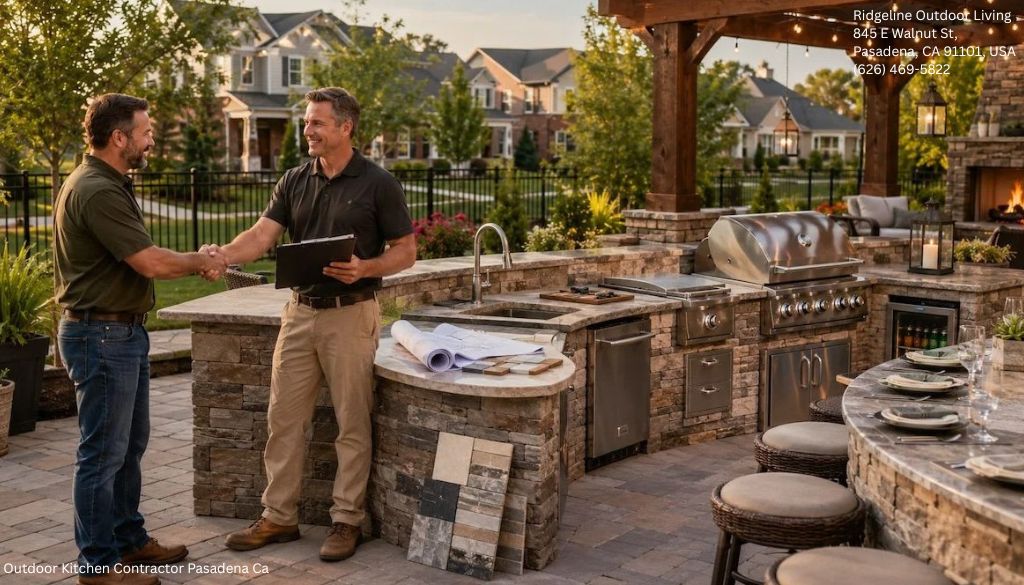
The easiest way to save irrigation is to reduce plant area in the right places. Outdoor kitchens, dining terraces, and fire features, when designed with permeable edges and appropriate shading, let you live outdoors longer without building out thirsty beds. Questions like How Much Does an Outdoor Kitchen Cost in Los Angeles come up during planning, and we remind clients that these investments displace square footage that would otherwise demand water. A compact kitchen with a permeable patio, a shade structure, and drought-tolerant borders can create a resort feel while keeping total planted area in check.
Decide early where you want green and where you want function
Not every corner needs planting. We plan the yard around use: morning coffee, dog run, afternoon reading, grilling, kids’ soccer. Concentrated green where you sit or view from inside gives the feeling of lushness without irrigating the whole lot. 10 Outdoor Living Ideas Transforming Los Angeles Backyards usually start with this kind of zoning: a soft, shady corner for reading, a hard-surfaced lane for play, a framed view for the living room. Done well, it trims water use and daily upkeep.
Drainage and grading are your silent water managers
How to Solve Common Yard Drainage Problems often intersects with saving irrigation water. If grades push every drop offsite, plants stay shallow-rooted and beg for frequent watering. If perched water sits by foundations, roots suffer and you irrigate to offset stress. We start with a laser level and a hose test, then refine planes so sheet flow heads to capture points. Common Landscape Drainage Problems and Their Solutions tend to repeat: downspouts dumping at foundations, flat planters with no overflow, clogged area drains, and compacted paths aiming water into beds. Fix these, and irrigation water does more work where you intend it.
A quick irrigation audit homeowners can do this weekend
- Check the water meter with all fixtures off; if the leak indicator spins, investigate valves and lateral lines Run each zone and note pressure and coverage; weak drip output often signals a clogged filter or failed pressure regulator Clean filters at the backflow preventer and any inline Y-filters, then flush drip lines from the end caps Verify controller programs by season; reduce runtimes and days as nights cool in fall Replace any missing or buried emitters, then add a fresh layer of mulch where bare soil shows
This simple circuit can save thousands of gallons per year and catch issues before they turn into wet spots or dead patches.
Lighting, fire, and year-round use without waste
12 Backyard Fire Pit Ideas for Entertaining Year-Round pair well with water-wise landscapes because gas or bioethanol fire bowls require no irrigation footprint and can anchor seating in gravel or on permeable pavers. 10 Outdoor Lighting Mistakes That Reduce Curb Appeal often include over-lighting plant beds; we keep fixtures off irrigation lines and use timers and motion sensors. The goal is to guide, not flood.
What to expect on cost and timeline
What Does Hardscape Construction Cost in Los Angeles is always site-specific, but the economics of water-wise upgrades tend to favor phased projects. A lawn-to-garden conversion with drip, mulch, and a few key trees can start around the mid teens per hundred square feet, rising with material choices and access. Permeable paver driveways are a larger commitment because of excavation and base rock volume. Smart controllers, flow sensors, and retrofitting spray to drip are cost-effective first moves, and they pay back in reduced bills and fewer plant losses from uneven watering.
A brief case study: from overwatered lawn to resilient retreat
A Mar Vista client came to us with a patchy fescue lawn, a rotted redwood deck, and monthly water bills that stung. We mapped hydrozones, replaced the deck with a light-colored permeable paver terrace, added a slatted pergola for dappled shade, and converted the front lawn to a mixed palette of manzanita, ceanothus, salvias, and lomandra. Downspouts now tie into a shallow swale that feeds the planting strip. The drip system runs two days a week in summer for year one, then dropped to one day. The owner reports a roughly 45 percent reduction in outdoor water use, plus the patio is comfortable at 3 p.m. In August thanks to shade and lighter paving.
How Ridgeline approaches design-build for water-wise results
How Ridgeline Outdoor Living Approaches Design-Build Landscaping is straightforward. We start with a site walk to read soil, sun, and slope. We test irrigation pressure and look at the controller history. We sketch use zones first, then plant palettes. We size drains and swales before we place a single shrub on paper. Each decision earns its way into the plan by doing multiple jobs: a pergola that shades the patio, protects the slider from summer heat, and reduces nearby irrigation; a permeable driveway that infiltrates and feeds trees; a plant palette that supports pollinators while thriving on deep, infrequent water. That is how Ridgeline Outdoor Living Creates Functional Outdoor Living Spaces that look good, work hard, and sip water.
Final thoughts from the field
Water-wise landscapes are not a style, they are a discipline. The projects that hold up best in Southern California treat water as a resource to be harvested, stored, and applied with care. Whether you start by converting a strip of lawn, swapping a controller, or planning a full backyard with a permeable patio and drought-tolerant borders, the results compound. Shade lowers demand. Healthy soil holds what you give it. Smart irrigation hits the mark. If you want a yard that looks good in a heat wave and recovers quickly after storms, these 15 ideas will get you there, one practical decision at a time.