Outdoor living in Los Angeles is not a luxury so much as a practical extension of daily life. Long, dry summers, mild shoulder seasons, and the expectation of entertaining at home make patios, courtyards, and hillside terraces carry more weight than a typical backyard lawn. At Ridgeline Outdoor Living, we think of these spaces as rooms with open skies. They need the same rigor you would give a kitchen remodel or a living room reconfiguration, only with sun angles, drainage, and plant resilience in the foreground.
What follows is how we approach the craft of building functional outdoor living rooms in Southern California, with details from jobs across the basin. If you want a daybed in the sun, a wood-fired grill that doubles as an entertainment anchor, or a hillside retreat that protects your foundation while adding usable square footage, design starts and ends with function. Comfort sits in the middle, exactly where the family gathers.
Start with how you live, not what you saw on a mood board
A good outdoor room reflects habits and constraints. A Brentwood client loved the look of sprawling sectional seating built around a fire feature, but their real pattern was weeknight family dinners for four and a dozen-person gathering once a month. We tightened the plan: a built-in bench along a property wall, a compact gas fire pit that leaves circulation clear on busy nights, and a dining table that expands with leaf inserts. The result looked clean, but more importantly, the space did not force anyone to constantly move furniture.
We do the same reality check with outdoor kitchens. Many homeowners ask about a pizza oven, a power burner, a smoker, and a full bar. Those can be excellent features, but on sites with limited square footage, they can turn into a cluttered lineup that makes prep and cleanup inefficient. We map adjacency the way a restaurant line cook would: cold storage near prep, prep near the grill, landing zones on both sides, trash and cleaning within a small pivot. That order of operations avoids the late addition of a hand sink crammed into a corner or a grill hood that vents straight into a seating area.
Program the space in planes
Indoors, we deal with walls and doors. Outdoors, we shape the room with grade changes, paving patterns, vertical elements, and plant massing. On a Santa Monica bungalow, we carved three distinct zones on a 25 by 40 foot yard without adding a single wall. A porcelain paver field set on pedestals formed the dining room. A cedar pergola lightly held a lounge area with sheer shade. Between them, a low stucco bench, capped with cast concrete, gave just enough separation for private conversation on one side and an easy pass-through for serving on the other.
At the front of many designs is the question of materials. In Los Angeles, paver patios and stamped concrete are asked about often. We install both. Pavers bring modularity and ease of repair, plus patterns that read as tailored and high value. Stamped concrete offers lower up-front cost and a broad color range. If you or a future owner will run utilities under the patio or anticipate movement due to expansive soils, pavers can save a headache. If the budget needs to stretch for other features like a pergola with integrated lighting, stamped concrete may make sense. The choice is not a referendum on aesthetics so much as maintenance tolerance and site conditions. We often show homeowners a mixed palette: pavers in the primary living zone for durability, smooth concrete or decomposed granite for secondary paths.
Sun, shade, and the mid-afternoon test
Comfort breaks if you misread sun paths. A lounge that bakes from 2 to 6 pm in August will sit empty. On each project, we pin down solar exposure throughout the year, and we physically test shade devices on site. Adjustable shade changes everything. Motorized screens on a covered patio turn a bright deck into a breezy room on hot afternoons, and pull up cleanly in the evening for a view. A pergola with an adjustable louver roof can make a shoulder-season breakfast table usable before the day warms up. Even a fixed slatted design can be tuned to the angle of peak sun, keeping light bright and indirect.
Clients often ask whether to build a pergola or a fully covered patio. Both have their place in Los Angeles. Pergolas are airier, friendlier to height restrictions, and can blend in where neighbors would object to a roofline extension. Covered patios expand the home’s thermal comfort and create true indoor-outdoor continuity. We look at view corridors, rain protection, and how often you plan to mount heaters, fans, or speakers. The right answer lives in those details, not in a trend photo.
- Pergolas vs covered patios, a quick comparison: Pergola: lighter visual footprint, easier permits, flexible shade with vines or louvers, rain protection limited unless louvers are sealed. Covered patio: best weather protection, ideal for heaters and fans, higher structural cost, can require more robust drainage and stricter approvals. Hybrid: a solid roof over the kitchen and dining, open pergola slats over the lounge for filtered light. Add-ons: motorized screens for wind and bugs, integrated downlights or string-light channels for evening use.
Surfaces that perform as well as they photograph
Los Angeles homeowners are spoiled for choice. We build with concrete, porcelain, natural stone, and interlocking pavers. Each has a different maintenance and performance profile. Porcelain pavers, typically 2 centimeters thick and set on pedestals or mortar, keep a crisp look, resist staining, and stay flatter where tree roots live nearby. They also absorb less heat than darker natural stones, which matters on a west-facing terrace.
Interlocking pavers remain a workhorse. When clients search for 15 paver patio designs Los Angeles homeowners love, they find herringbone, basketweave, and modern linear patterns that feel current without shouting for attention. In practice, we pick color blends that hide dust and turn forced perspective to our advantage: larger formats and running bond lines can make a narrow side yard feel wider, while a border band frames a seating area like a rug.
Stamped concrete sits in a different lane. It gives the ability to pour a large, continuous surface with joints controlled by saw cuts. A light broom finish in travel paths avoids slickness, and a subtle stamp pattern in seating areas warms the feel without tipping into faux. When we compare paver patios vs stamped concrete, the conversation always ends with two questions. Will you want to lift sections for repairs or new utilities later. How do you feel about sealing every few years. Pavers are modular and easier to service. Stamped concrete generally costs less upfront but needs active sealing to keep color and reduce staining.
Water is always the quiet stakeholder
Angelenos tend to think about drought first, but drainage mistakes are the reason calls come in after heavy winter storms. French drains explained simply: they are gravel-filled trenches with perforated pipe that intercept water and move it away. They work when they receive sheet flow, have the right slope, and discharge to a place that can handle it. They fail when installed flat, wrapped in fabric that clogs with fines, or tied into downspouts without calculating volume.
On a Studio City project, the owner had a sunken patio that flooded twice a year. We lifted the patio with new base, created two subtle swales that guided water to a channel drain, and tied that into a dry well sized for a 25-year storm. The fix was invisible, which is how drainage work should be. We also incorporated a generous gravel band along the fence line so minor overland flow had a pressure release. When we publish 10 signs your yard needs better drainage, we could just show that yard before the work: algae on paving, soft base layers, peeling stucco at the bottom course of the house.
Hillside properties bring their own calculus. Retaining walls for hillside properties are more than a way to gain a level pad. They resist lateral earth pressure, manage water, and shape how usable your lot becomes. In the Hollywood Hills, we built a terraced outdoor living room on a 2:1 slope. The top wall, a steel-reinforced block and concrete system with proper geogrid, anchored the highest platform for dining. Below it, a planter wall softened the grade change with native grasses and dwarf manzanita, then a final low wall edged a seating pit. Behind the walls, we ran granular backfill and continuous drainpipe with accessible cleanouts. That one decision, cleanouts every 50 feet and at turns, reduced long-term maintenance and avoided the most common failure, a saturated wall with nowhere to bleed off. If you want a primer, the complete guide to retaining walls in Los Angeles starts and ends with engineering, drainage, and permits, not with stone veneer samples.
Planting that survives, then delights
The best drought-tolerant plants for Los Angeles yards are not always the most photogenic in a nursery pot. They mature into graceful forms and require less fuss over time. We lean on salvias, lavenders, manzanita, ceanothus, westringia, and feather reed grass for structure. For accents, agaves and aloes add sculptural weight, while desert spoon or artichoke agave punctuates modern compositions. The ultimate guide to drought-tolerant landscaping in Los Angeles would highlight one truth we see repeatedly: irrigation must be smart and temporary. Deep watering during establishment, then tapering to infrequent, longer cycles that train roots down rather than to the surface.
Artificial turf vs sod remains a live debate. For clients who want year-round green without the water bill, high-quality turf with proper base and infill delivers. We always specify a robust subgrade and a nailer board to keep edges tight, and we add a layer of antimicrobial infill if the yard hosts pets. Natural sod, whether tall fescue blends or low-mow native mixes, offers a cooling effect and a softer underfoot feel. It also asks for more water and consistent care. We often mix both: a small sod lawn for kids, framed by hardscape and drought-tolerant beds, then synthetic turf where shade or heavy traffic would turn sod to mud.
Light that works with darkness, not against it
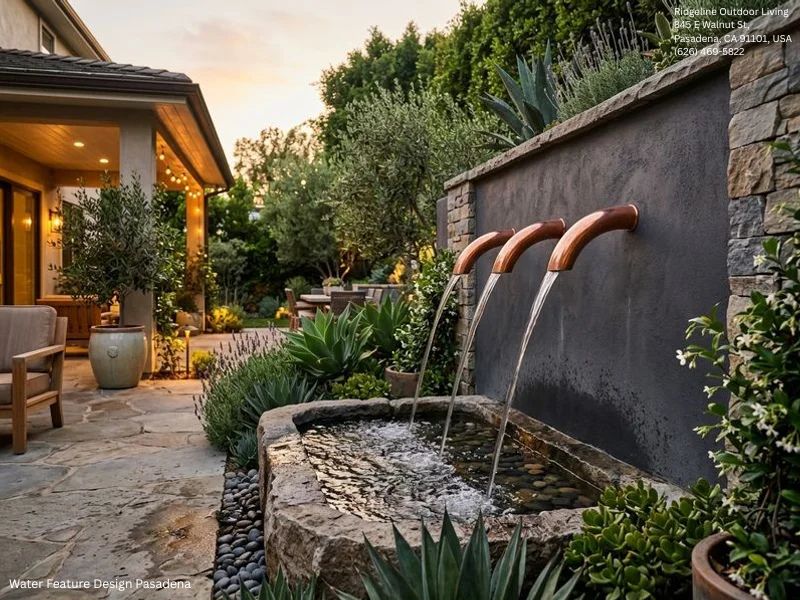
Too much landscape lighting flattens a yard and kills mood. We aim for a layered scheme. Path lights at low wattage guide movement, while downlights from pergolas or trees cast soft shadows and make faces comfortable around a table. On a Pasadena courtyard, we installed only seven fixtures: four slim bollards along a decomposed granite path, two downlights tucked into a beam, and a single spot kissing a stone water bowl. The room comes alive at dusk, with no glare and no neighbor complaints. For homeowners browsing 10 outdoor lighting ideas for Los Angeles landscapes, look for those that play with contrast and preserve dark pockets. Also avoid the common errors we see in 10 outdoor lighting mistakes that reduce curb appeal, like over-lighting the facade or pointing floods directly into sightlines.
Integrated lighting works particularly well under a covered patio. We run dimmable, warm-white LEDs on separate zones for task and ambiance, and we align switches to your home’s interior controls so you are not hunting for remotes. Light becomes one more way to make an outdoor room feel like part of the house.
Fire, water, and the practical romance of both
Los Angeles nights often beg for a small fire feature. It might be a linear gas unit tucked into a stucco bench or a round fire bowl that draws a circle of chairs. We coach clients away from massive flames that overwhelm conversation. Lower BTU settings and wind guards protect comfort, and a key valve in a discreet but reachable spot ensures safety. Homeowners looking for 12 backyard fire pit ideas for entertaining year-round usually land on one constant: keep the heat where the people are, not where the camera is.
Water features shift the mood without dominating. The trick is restraint and the right pump size. A sheet of water into a narrow rill can hum along at a few hundred gallons per hour and still feel luxurious. For those collecting 12 water feature ideas for luxury Los Angeles backyards, the ones that age well do not ask you to wipe overspray off furniture. When a feature sits near the living room, silent is often better than showy.
Kitchens that earn their square footage
How much does an outdoor kitchen cost in Los Angeles. The short answer is a range. A compact island with a grill, storage, and a small counter might start around the low five figures installed. A larger L or U with a built-in grill, fridge, sink, trash, and stone or porcelain counters, plus gas and electrical runs, can run to the mid or high five local landscapers in Pasadena figures. Add a pizza oven, custom steel doors, or an overhead structure and the budget climbs from there. For a full outdoor kitchen with bar seating, a vented hood, heaters, and integrated lighting, plan for a serious investment that parallels a mid-range indoor kitchen remodel.
Trends come and go, but what Los Angeles homeowners are choosing this year shares a throughline. Durable, low-maintenance finishes like porcelain slab counters. Induction side burners where gas access is tight. Drawer fridges that stay within the kitchen footprint and keep aisles clear. We also specify vents in all enclosed cabinet runs, especially under sinks and fridges, to prevent moisture buildup.
Ridgeline Outdoor Living’s guide to outdoor kitchen design would place three rules at the center. Give yourself at least two feet of landing space on either side of the grill. Keep the sink close to prep and trash. Do not bury propane tanks in closed cabinets without proper venting. Spacing and safety trump any color palette.
Casework, seating, and the art of built-ins
Built-in seating turns small yards into highly functional rooms. A continuous bench might give you the equivalent of six chairs along a tight edge and doubles as a retaining element for a planter. On a Culver City ADU yard, we wrapped two sides of the patio with a masonry bench topped in thermally modified ash. The storage underneath held cushions and games, and by keeping the backrest height modest, we preserved sightlines to the garden. Add a slim cushion and a few pillows and you have the comfort of indoor furniture without the clutter or maintenance of loose pieces.
In larger yards, we anchor seating with low walls that hold the plan. A wall at 18 inches tall encourages perching. At 24 inches, it becomes a respectable seat back when paired with a 16 to 18 inch seat height in front. Proportions matter as much outside as inside.
Driveways and the first impression
We treat driveways as part of the outdoor living composition, not a separate utility. The most popular driveway materials in Los Angeles include concrete with decorative saw cuts, permeable pavers, and exposed aggregate. Permeable systems do double duty, offering a crisp look while infiltrating water. For homeowners weighing 15 driveway paving ideas to improve curb appeal, consider pairing a neutral field with a darker border that nods to your patio palette. There is real property value in coherence, one of 10 hardscaping features that increase property value without shouting their presence.
Hillsides, value, and the calculus of cost
Hillside landscaping can feel like a puzzle with no edges, but it is where design-build shines. The complete guide to hillside landscaping in Los Angeles would talk about erosion control, soil type, surcharge loads from parked cars or pools, and the way microclimates change with elevation and exposure. We run modeling on drainage and work with geotechnical reports when slope and soil dictate. The payoff can be enormous. A tiered hillside with terraced patios, switchback paths, and native planting can unlock three or four distinct rooms where a steep slope once stood.
What does hardscape construction cost in Los Angeles. Expect higher labor and permitting costs than you might read in national averages. Skilled masons, engineered walls, and code-compliant gas and electrical runs carry a premium. That is not a scare tactic. It is a reality that informs smart phasing. We often suggest tackling grading and utilities first, then the main patio, then secondary features like a spa pad or a secondary deck. Homeowners who plan upgrades over time avoid rework and preserve budget for quality where it counts.
Turf, play, and quiet zones for recovery
Family yards work hardest when they offer more than one mode. A strip of synthetic turf beside the house can be the perfect place for high-energy play without dragging dust into the main entertaining terrace. A small lawn of real grass might sit in dappled light where it thrives, while a private corner behind shrub massing becomes a reading nook with a chaise and a small side table. When we develop 10 ways to create a resort-style backyard at home, we build in contrast. One sunny terrace, one shady refuge, one active play area, one quiet pocket.
A short checklist we use before breaking ground
- Map your highest-use times and activities by season, then test furniture footprints with tape on the ground. Identify sun, wind, and neighbor sightlines to inform shade, screens, and planting mass. Confirm drainage paths and where water will go in a major storm, not just a light rain. Prioritize power, gas, and lighting zones early so trenches happen once and in the right order. Choose two or three materials that relate across driveway, patio, and steps to unify the property.
Permits, neighbors, and the value of doing it right
Many outdoor projects require permits, especially those with gas, electrical, or structural elements like retaining walls or covered patios. A well-documented plan set and inspections keep projects on track and protect resale value. On hillside lots, plan check can take longer, and you may need neighbor consent if work sits near a shared line. We value good communication. A brief letter to neighbors about work hours, staging, and dust control takes the edge off and prevents avoidable delays.
Entertainment features with purpose
Backyard entertainment does not mean an amusement park. For a Hancock Park client, we installed a small projection wall on the back of a garage, paired with a discreet speaker system and low-output step lights. Movies on summer nights became a ritual, and the wall acted as a quiet backdrop by day. For others, a plunge pool or a stock-tank-inspired spa with proper equipment pad placement can deliver daily recovery. Outdoor kitchen features that are worth the upgrade include a second small fridge for beverages, a pullout trash next to prep, and a low-profile vent hood where a covered patio traps smoke.
If you like compiling 12 backyard entertainment features every homeowner should consider, most lists share a few constants in Southern California: shade control, comfortable seating at different heights, a reliable heat source, and lighting that lets the night breathe.
Drainage and durability beneath the beauty
Common landscape drainage problems and their solutions are less visible than tile color or fire bowl finish, but they decide long-term satisfaction. Where clay soils dominate, we increase base thickness and select permeable edges to relieve hydrostatic pressure. On flat lots, we create micro-contours that read as level but guide water to drains. If your property experiences yard flooding, proper drainage solutions may include area drains at low points, french drains to intercept subsurface flow, or regrading to eliminate birdbaths. The cost is modest compared to repeated paver heave or a wet crawlspace.
Retaining walls prevent erosion on hillside properties not just by holding soil, but by staging vegetation that shields slopes from direct impact. We plant deep-rooted natives above walls and drought-tolerant groundcovers on faces where appropriate. Edges matter. We cap walls with slightly overhanging stones to throw water clear, and we avoid mortared joints that trap moisture unless detailing calls for a controlled weep path.
When to choose help, and how to vet it
Design-build landscaping thrives on accountability. One team owns design intent, engineering coordination, permitting, and construction, so gaps close early. If you are interviewing firms, arm yourself with 10 questions to ask before hiring a landscape contractor. Confirm licensing, insurance, who will be on site daily, how change orders are handled, and what the schedule looks like with inspections and utility coordination. Ask to see a recent project similar in scope and budget, not just a greatest-hits album of photographs.
Professional landscape design often saves time and money because decisions are sequenced logically. The trench for gas and electric runs once, not three times. Base layers are compacted to spec the first time. Finish schedules prevent a late realization that the fire pit coping clashes with the pool tile. Those details make a build smooth, and they make a yard age gracefully.
The Ridgeline perspective on custom comfort
Functional outdoor living spaces rarely emerge from a single big move. They arrive through a series of tuned decisions that respect climate, slope, budget, and the way you spend your days. We like the projects that do not shout at the curb. They invite quietly. The patio that slides open from the kitchen, shaded appropriately, with seating that eases conversation. The small water feature that softens traffic noise. The outdoor kitchen that works on a busy Tuesday and on a festive Saturday. The hillside room that holds firm in a storm and glows at dusk.
Business Name: Ridgeline Outdoor Living
Address: 845 E Walnut St, Pasadena, CA 91101, United States
Phone: (626) 469-5822
Ridgeline Outdoor Living
Ridgeline Outdoor Living is a Pasadena-based landscape design-build company serving Greater Los Angeles with custom outdoor living, hardscape, and drought-tolerant landscape solutions. The company specializes in patios, retaining walls, outdoor kitchens, drainage, hillside projects, and turnkey landscape construction, handling projects from design and permitting through final build and warranty.
845 E Walnut St, Pasadena, CA 91101, USA
Business Hours:
- Monday – Saturday: 8:00 AM – 6:00 PM
- Sunday: Closed
Follow Us:
When homeowners search for how Ridgeline Outdoor Living creates functional outdoor living spaces, they tend to find photographs first. We prefer the stories. The couple who started hosting family dinners weekly because the outdoor dining space felt as welcoming as the interior. The retiree who began every morning under a pergola with filtered light and a coffee, thankful that the breeze, not the glare, dictated how long she stayed. The young family whose yard no longer flooded, whose kids now run a circuit from small turf patch to paver patio to reading bench. Those are the measures we carry forward.
Custom comfort is not a style. It is a fit. In Los Angeles, where the outdoors is the longest room in the house, fit is everything.