Property owners in Los Angeles tend to worry about fire, drought, and earthquakes, yet water quietly does more damage to structures than any other element. One winter of El Niño rain, a broken irrigation line uphill from a foundation, or a neighbor grading their lot without attention to runoff can drive water into footings, basements, and slab seams. The fix often looks humble: a trench, a perforated pipe, gravel, and fabric. Installed with the right elevations and tied to proper discharge, that humble system, the French drain, becomes the backbone of a dry, stable property.
Ridgeline Outdoor Living designs and builds landscapes across Los Angeles County, from hillside lots in Silver Lake to flat pads in the Valley. We rely on French drains because they are predictable when detailed correctly, and because they integrate cleanly with the hardscapes and plantings our clients want. The system is simple in theory and unforgiving in practice. Grade must be true. Soil mechanics matter. Discharge must be lawful and safe. The following sections explain how French drains work, where they fit in LA, what they cost, and how we install them so they protect structures without telegraphing their presence.
What a French drain actually does
A French drain is a subsurface collector. Water always follows the path of least resistance and seeks elevation changes. A perforated pipe embedded in washed rock creates a high-permeability pathway that is easier for groundwater to enter than the surrounding soil. Filter fabric prevents fines from clogging the voids. The trench is sloped so collected water flows by gravity to a safe outlet. The components do not change much, whether you live in Pasadena clay or Santa Monica sand, but the way they are sized and placed does.
In cohesive clay, which swells when wet and shrinks when it dries, lateral flow is slow. We increase trench width and gravel volume to create storage and lower the perched water table. In sandy or decomposed granite soils, flow is fast and we can shift design attention to robust silt control at the inlet and outlet. When a building sits into a slope, we often combine an interceptor drain uphill to catch sheet flow with a foundation drain at footer depth to relieve hydrostatic pressure. A French drain is not a cure-all. It is a tool that, when used where physics suggests, solves common yard drainage problems with consistency.
Why Los Angeles yards need subsurface drainage more than it seems
LA averages roughly 12 to best landscaping companies in Pasadena 18 inches of rain most years, which lulls people into complacency. The problem is intensity. Storms can drop an inch or more in an hour. Add long dry spells that harden the soil, roofs and patios that shed water quickly, and hillside lots that collect runoff from above, and you get short, violent flows that overwhelm surface swales and bubble into garages. Municipal storm systems are designed for specific return intervals. Private lots need their own plan.
Two site conditions drive most of the calls we take.
- Signs your yard needs better drainage: Water stands for more than 24 hours after rain, especially near the foundation or footpaths. Efflorescence or damp staining appears on stem walls, garage slabs, or the base of interior drywall. Wood fences or deck posts show rot only at the base, with soil nearby feeling spongy. Pavers settle in strips that line up with roof downspouts or irrigation heads. Landscape beds slump or erode where a slope meets a flat.
Those symptoms show up on both new and old lots. New construction often compacts the pad like a parking lot, then adds irrigated planting against the house. Older neighborhoods see elevation creep. Each driveway redo, artificial turf installation, or patio expansion shifts flow. We consult on projects centered on design - 10 Outdoor Living Ideas Transforming Los Angeles Backyards, 15 Paver Patio Designs Los Angeles Homeowners Love, and the rest - and we still start with water. Beauty fails if the grade gets water wrong.
Anatomy of a reliable French drain
Several details separate a drain that protects a property for decades from one that chokes in two seasons.
Trench depth and location come first. Around foundations, the pipe should sit at or slightly below the bottom of the slab or footing if we are relieving hydrostatic pressure, never above where it would just carry surface water. Interceptor drains that collect sheet flow sit higher, near the toe of a slope or the uphill edge of a patio. We aim for a minimum slope of 1 percent, and more if the site allows. If fall is limited, we verify elevations with a builder’s level and sometimes add a sump with an automatic pump.
Aggregate matters. We use 3/4 inch washed gravel that meets ASTM gradation, which keeps voids open without trapping silt. The more fines in the gravel, the shorter the drain’s useful life. On expansive clays and in yards with heavy organics, we increase the gravel envelope thickness to create more storage volume. We wrap the gravel in a nonwoven geotextile with a flow rate over 100 gallons per minute per square foot. The fabric is not a landscaping weed cloth. If the fabric feels like a tarp, it does not belong in a drain.
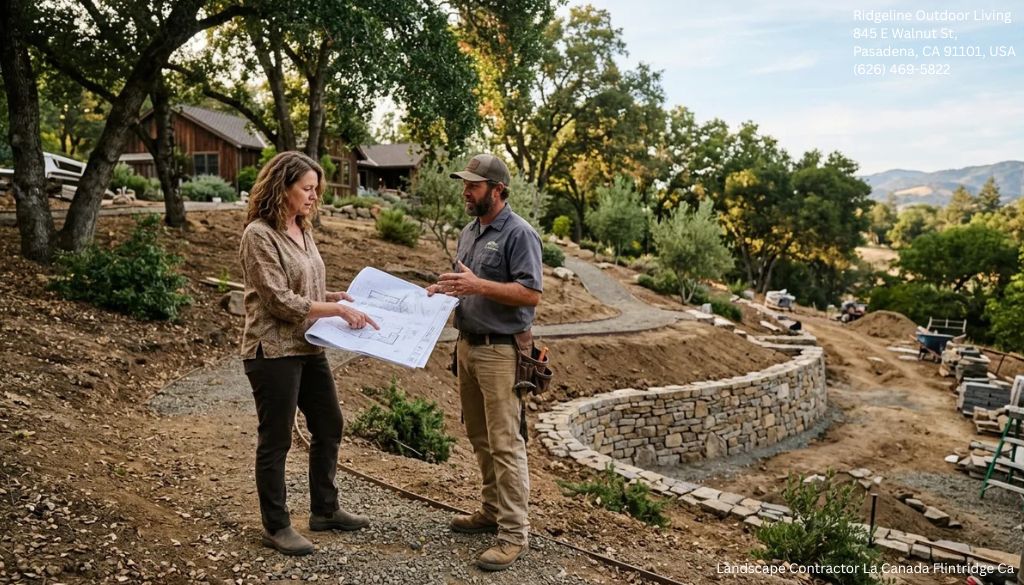

Pipe choice depends on layout. We prefer schedule 40 PVC perforated pipe for its rigidity, consistent slot size, and ease of maintenance access. It holds pitch and resists crushing under driveways. Corrugated HDPE has its place on long, curved runs where grade is generous and loads are light. We place perforations down when the trench bottom is flat and the sides hold gravel, which lets water rise into the pipe from below. In very wet subsurface conditions, we sometimes use a full-round perforation pattern with gravel to the surface for maximum capture.
Inlets and cleanouts keep systems serviceable. We install vertical cleanouts at transitions and corners, which allows snaking the line if organics build up. At the uphill end, a sumped catch basin can collect surface silts before they reach the pipe. At the outlet, we use a rodent-proof grate and energy dissipation such as a splash pad or riprap in a curb cut or on-grade discharge point. Where code requires, we tie into an approved storm connection. Discharge across sidewalks or into a neighbor’s yard is never acceptable.
Where French drains fit into whole-property design
French drains usually disappear under gravel strips, mulch beds, or lawn. On design projects, we choreograph them with other features so they protect the investment without creating visual seams.
Paver patios and driveways in Los Angeles need subdrains when abutting slopes. Pavers breathe, which is a benefit in heat, but they also let water pass through joints. A drain behind the retaining edge keeps the base dry and stops frost heave, which, yes, can happen on cold valley nights when saturated aggregate expands. The detail adds to cost during installation and saves far more in re-leveling later. For clients considering Paver Patios vs Stamped Concrete, we include drainage discussions in the comparison because concrete slabs rely on surface runoff more heavily.
Outdoor kitchens, pizza ovens, and heavy pergola footings concentrate load. If a patio holds a 2,500 pound island with gas and electric, we want the base well drained. Trapped moisture under a slab encourages efflorescence and can corrode conduits. Discussions around Outdoor Kitchen Trends Los Angeles Homeowners Are Choosing or How Much Does an Outdoor Kitchen Cost in Los Angeles become more honest when drainage is factored into utility trenches and slab prep.
Artificial turf installations live or die by subgrade drainage. Turf over compacted DG can shed water well if we add a shallow interceptor alongside uphill hardscape. We often pair turf with drought-tolerant plantings in biofiltration swales. The Ultimate Guide to Drought-Tolerant Landscaping in Los Angeles and The Best Drought-Tolerant Plants for Los Angeles Yards both intersect with drainage design because healthy plants reduce runoff by holding soil and increasing infiltration.
Retaining walls are nonnegotiable. Every wall needs a drain at the heel to relieve hydrostatic pressure. How Retaining Walls Prevent Erosion on Hillside Properties and Retaining Walls for Hillside Properties: What Homeowners Need to Know both point to the same truth. A great-looking wall without a drain fails silently until a wet winter shows the mistake. We include a perforated drain line at the base, gravel backfill, and an outlet with inspection access. The cost to add it during construction is modest. The cost to retrofit once a wall bulges is rarely pleasant.
Installation in LA conditions, start to finish
Clients often ask what installation actually looks like on their property. The following is the field-tested sequence we use most often.
- How Ridgeline installs a French drain, step by step: Elevation mapping. We shoot grades to the quarter inch with a laser level from the intended inlet to the discharge, verify fall, and document existing utilities and irrigation. Trenching. We cut turf or hardscape cleanly, trench to plan depth, and hand-shape the bottom so no high spots flatten the pipe. In clay, we widen the trench to improve storage. Fabric and gravel. We lay nonwoven geotextile, place a layer of washed gravel, set pipe to laser-verified pitch, then surround with gravel to design height. Connections and cleanouts. We solvent-weld solid transitions, add vertical cleanouts, and tie downspouts or area drains into the system with sumped basins where needed. Backfill and finish. We wrap fabric over the top, add soil or decorative gravel to grade, reinstall or replace surface finishes, then run a hose test to confirm flow at the outlet.
On a typical single-family lot, a 60 to 120 foot French drain with one or two catch basins takes one to three days depending on access and surface restoration. Permitting is rarely needed for on-site drainage that does not alter public right of way, but curb cuts must be permitted, and tying into city storm lines requires approval. We handle that coordination when the design calls for it.
Costs you can budget for
Pricing ranges reflect access, demolition, soil conditions, and where we discharge the water. It is reasonable to think in terms of ranges per linear foot for the drain itself, then add line items for surface restoration and special features.
- French drain installation, residential LA conditions: Standard French drain in soil with gravel and fabric, 18 to 30 inches deep, 45 to 90 dollars per linear foot. Deeper foundation relief drain, 30 to 48 inches, rigid PVC, cleanouts, 75 to 120 dollars per linear foot. Sump basin with automatic pump and check valve, 2,000 to 6,000 dollars depending on depth and power runs. Dry well sized for 100 to 300 gallons, 1,500 to 5,000 dollars depending on soils and access. Surface restoration, from 10 dollars per square foot for lawn and mulch to 20 to 35 dollars per square foot for pavers or decorative concrete.
Costs move up in constrained backyards with narrow side yards, hand trenching, or when we must sawcut and replace driveways. They also shift when we coordinate with other upgrades. If a client is already investing in 15 Driveway Paving Ideas to Improve Curb Appeal or 12 Outdoor Living Features That Add the Most Value, threading drainage into those scopes reduces the overall premium. Drainage done during new build or major landscape redesign is the most cost-effective timeline.
Where to send the water
Collecting water is half the job. Discharging it safely is the other half. In Los Angeles, the goal is to keep water on site where practical, which reduces burden on storm infrastructure and helps recharge aquifers. When soils accept infiltration, dry wells or infiltration galleries are sound options. We size them based on contributing area and percolation rates. If a property sits on tight clay and infiltration is poor, we direct water to a legal curb outlet with energy dissipation so it does not scour the gutter.
Tying French drains to roof downspouts is effective when the outlet is designed for the combined flow. A single downspout in a typical storm can convey 300 to 600 gallons per hour. Four of them piped to a small dry well will overwhelm it quickly. We often split flows, send roof water to a larger chamber or curb cut, and let the French drain deal with yard and subsurface water. There is no one-size solution. The discharge plan decides whether a system relieves a flood or moves it from one corner to another.
Maintenance that keeps systems alive
French drains do not need much attention if installed carefully, yet even the best system appreciates a checkup. We advise clients to inspect outlets before and after the rainy season, clear leaves from grates, and run a hose test if they notice new settlement or staining. Cleanouts allow a drain snake to remove fine organics that inevitably migrate into the gravel. If a system ties into catch basins, those basins benefit from vacuuming out silt and debris once a year.
We encourage owners planning 10 Outdoor Lighting Ideas for Los Angeles Landscapes or 12 Backyard Fire Pit Ideas for Entertaining Year-Round to avoid piercing drain runs when staking fixtures or setting fire pit foundations. We document the as-built drain path on a site plan and mark it lightly on the property for future trades. Most surprises happen years later when a new project drills into a line no one remembered. Good records avoid that headache.
Case notes from recent Ridgeline projects
A hillside ranch in Sherman Oaks sat below two uphill properties. Every rain, water sheeted across the turf, pooled at the patio door, and sank into the slab. We laid an interceptor French drain along the rear slope, 24 inches deep with a broad gravel envelope, and tied three catch basins at low points. We routed the system along the side yard to a permitted curb outlet with a discreet curb core. We also redirected two downspouts away from the patio, and we recut the patio edge to introduce a subtle 1.5 percent pitch out. The next storm brought an inch in ninety minutes. The owner texted a photo of the outlet running like a spigot and a patio that stayed dry.
In Mar Vista, a midcentury home on sandy soil had chronic efflorescence on the garage wall. A French drain at footing depth would have worked, but excavation beside that wall risked undermining an older stem. We treated the symptom and the cause. We moved irrigation lines that sprayed the wall base, designed a shallow French drain outside the dripline of a ficus that added a surprising amount of water to the soil, and installed a small dry well for roof water intercepted from a rear downspout. It cost less than a deep foundation drain landscaping guides and solved the problem because the site’s sandy profile allowed quick percolation.
Business Name: Ridgeline Outdoor Living
Address: 845 E Walnut St, Pasadena, CA 91101, United States
Phone: (626) 469-5822
Ridgeline Outdoor Living
Ridgeline Outdoor Living is a Pasadena-based landscape design-build company serving Greater Los Angeles with custom outdoor living, hardscape, and drought-tolerant landscape solutions. The company specializes in patios, retaining walls, outdoor kitchens, drainage, hillside projects, and turnkey landscape construction, handling projects from design and permitting through final build and warranty.
845 E Walnut St, Pasadena, CA 91101, USA
Business Hours:
- Monday – Saturday: 8:00 AM – 6:00 PM
- Sunday: Closed
Follow Us:
A Brentwood project layered function under luxury. The client wanted 15 Luxury Hardscape Ideas for Southern California Homes in one yard: a pool terrace, an outdoor kitchen, a bocce court, and a lawn panel of artificial turf. All of those surfaces needed subdrains or edges to manage water. We installed perimeter French drains around the pool deck and a collector along the uphill planting with leader ties to a large infiltration gallery hidden under the bocce court. The gallery had inspection ports for maintenance. Design hours spent on water meant the visible features aged gracefully.
Integrating drains with drought-wise landscapes
Drought-tolerant planting and French drains are good partners. The plants reduce irrigation demand and, when chosen wisely, anchor slopes that once produced muddy rills during storms. Drains pull away excess water after big events, which keeps Mediterranean and Californian natives from sitting in cold, wet soil they dislike. We often use shallow rock swales that read as design features, routed subtly to the inlets of a French drain. Clients appreciate landscapes that celebrate water when it is present and survive when it is not. Why Drought-Tolerant Landscaping Is a Smart Investment remains true even as storms get stronger. It is about resilience in both directions.
Common pitfalls and how we avoid them
Several mistakes show up repeatedly when we are called to rescue failed systems. Trench bottoms that change pitch create bellies where silt collects. Corrugated pipe kinks under patios and closes its own slots. The wrong fabric strangles the system, trapping fines like a coffee filter. Outlets without rodent grates invite occupants that block flow. Most frustrating of all, contractors route a French drain into a segment of solid pipe that has no slope, then wonder why water hangs.
We counter each of those with method and documentation. Crews check slope during backfill, not just at set. We mandate rigid pipe under any load and set trench widths with forms so gravel cover is consistent. We specify fabric by product, not generic description, and we show clients the label on site before it goes in. Outlets get stainless grates because plastic ones crack and disappear. We run water through the system before closing the last feet of trench so any correction happens while it is easy.
When a French drain is not enough
Some sites need more than a French drain. A house with a basement below street grade may need a combined system with a sump and backflow protection. A steep lot may require contour swales and a series of check dams in tandem with subdrains. Clay sites with nearly zero percolation do not accept dry wells. In those cases, we design hard connections to the street with air gaps and energy dissipation, then coordinate permits. The goal is not to force a favorite detail everywhere. The goal is a system that respects the site and code.
We also pay attention to how new features change hydrology. A new covered patio, a pergola with a solid roof, or even the choice between Pergolas vs Covered Patios shifts where water falls and how fast. Designing the Perfect Outdoor Dining Space or choosing Outdoor Kitchen Features That Are Worth the Upgrade is more satisfying when we have a plan for the extra roof runoff those features create. We plumb downspouts to drains from day one, not as an afterthought once stains appear on concrete.
Working with Ridgeline from assessment to verification
Our process starts with listening. We walk after a storm when possible. We step across lawns to find the spongy spots and check fences where posts rot early. We bring a level and a camera snake. If there is an HOA or city requirement, we read it before design. We generate a drainage plan that ties into our broader landscape vision, whether you are choosing How Ridgeline Outdoor Living Designs Stunning Outdoor Spaces or simply solving one persistent wet corner.
During construction, clients see the system as it goes in. We keep trenches open long enough to confirm elevations together and to photograph the buried work for our records. At handoff, we provide an as-built plan, recommended maintenance, and test the discharge. If we tie to a pump, we label the circuit and show where the check valve sits. It sounds formal, and it is, because buried infrastructure deserves care equal to visible finishes.
Last thoughts before the next rain
Water has a longer memory than most materials in a yard. It remembers slopes, tiny gaps, and where gravity wants it to go. French drains, properly designed and built, give water a path that serves your property rather than hurts it. In Los Angeles, where storm intensity and long dry spells coexist, they are essential underpinnings for the outdoor spaces people enjoy. Whether you are taking on 10 Backyard Upgrades Worth the Investment, planning Pool Landscaping Ideas for Los Angeles Homes, or facing 10 Signs Your Yard Needs Better Drainage, start by getting the water right. Ridgeline builds landscapes that look good on opening day and in the third winter, because we respect the quiet work that happens underground.