Los Angeles is kind to outdoor living. Even when a marine layer drifts inland or a Santa Ana gust races down the canyon, the right fire feature keeps an evening going. After two decades building backyards from the Flats to the foothills, I have watched a well-placed flame turn a patio into the favorite room of the house. The ideas below come from that fieldwork, not a catalog. They balance design, code, wind, fuel lines, embers, and the realities of Los Angeles life like drought conditions and hillside lots. If you are planning a broader remodel, you will see where fire integrates naturally with pavers, lighting, outdoor kitchens, and water-wise planting. The goal is simple: safe warmth, strong design, and a backyard that earns its keep twelve months a year.
Start with the site, then the style
Every successful fire pit starts with three judgments: what the space can handle, what the city will allow, and how you plan to use the flame. I once met a homeowner in Studio City who had ordered a mail‑order bowl, only to realize the only flat spot was in the middle of a wind tunnel between the garage and a bamboo hedge. The fix was not new furniture. We rebuilt a portion of the patio with heavier pavers, tucked the pit against a stucco wind baffle, and plumbed gas from the side yard. The difference was night and day. The lesson holds everywhere: placement earns most of the comfort, style simply seals it.
A quick planning check
- Confirm setbacks, clearance to structures and eaves, and HOA or city rules. Choose a fuel type early, since gas lines, propane storage, and ash handling all affect layout. Map wind patterns at dusk, not noon. Plan baffles or position accordingly. Test seating reach. A 36 to 48 inch interior diameter suits most small groups; larger pits need deeper seating. Think of adjacencies: outdoor kitchen, dining, or a pool, so traffic and views feel natural.
Fuel, heat, and safety in an LA context
Los Angeles does not ban wood-burning entirely, but the South Coast AQMD often calls no-burn days during winter inversions. Many clients choose natural gas or propane for reliability and clean operation, then keep a tabletop ethanol burner for ambience elsewhere. A properly tuned gas burner will throw steady heat without smoke, and with a key valve or electronic ignition, it turns on and off instantly. Wood still has its magic, but it asks for more distance from structures, more ash management, and spark screens, especially when the wind lifts in the afternoon.
Clearances matter. We keep 10 feet from structures as a working minimum for wood, and 5 feet or more for gas, with special attention to overheads. Under covered patios, you need an approved fire bowl or linear burner with a ventilated hood rated for combustible overheads, plus make-up air and clearances listed by the manufacturer. On hillside properties, where decks and slope setbacks complicate matters, a retaining wall can double as a wind break and a bench, and a French drain behind the wall keeps runoff from undermining your new hardscape. Clients sometimes call about smoke stains on stucco after a season. That is a placement and ventilation issue, not just a cleaning issue. Solve the cause.
The right materials for the right microclimate
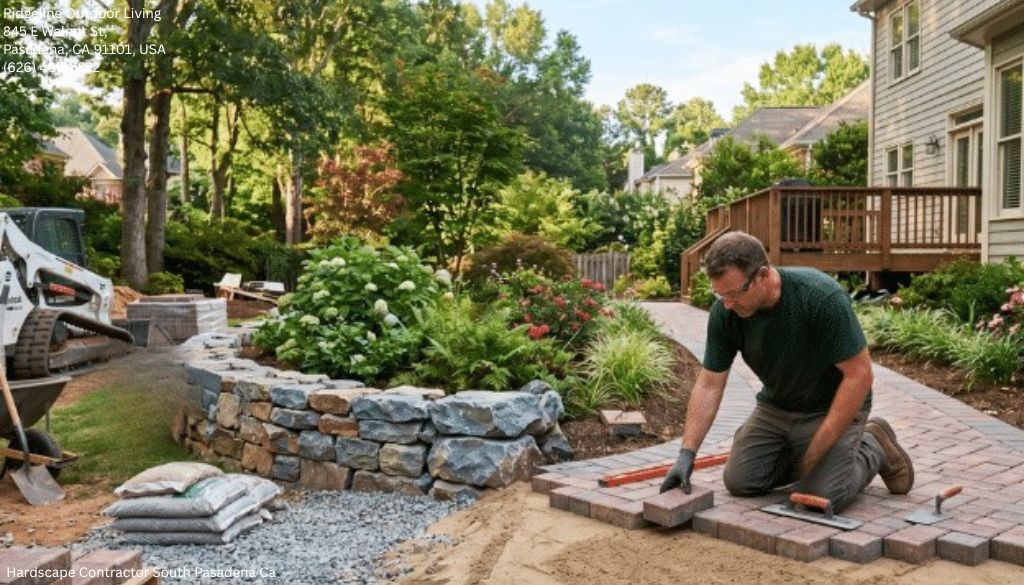
Hardscape looks permanent, but LA’s climate tests everything. Sea air etches polished steel, canyon winds drive grit into mortar joints, and full sun bleaches the wrong concrete sealer. We specify cast-in-place concrete with integral color on coastal lots to avoid topcoat fading. For pavers, porcelain over a concrete base holds color and cleans easily, while tumbled concrete pavers lend character and grip underfoot. Basalt and dense granites do well near pools and water features, and they tolerate a little ash fall. If you want the classic Santa Barbara limestone look, use a sealed veneer on block, and tuck a stainless heat shield behind the veneer if flames sit close.
Bench caps and seat walls need a comfortable edge and thermal resistance. A 2 inch stone cap with a 1 inch eased overhang resists chipping and sheds spills. For modern linear fires, powder-coated steel planters and corten steel both make strong frames, but corten can stain adjacent surfaces as it patinas. Plan for a discrete drip edge or a gravel border so rust wash does not streak your new driveway pavers.
Twelve fire pit ideas that live well in Los Angeles
1. Low circular pit on a paver carpet
The most requested layout remains a low, round pit centered on a broad paver apron. It is sociable, it photographs beautifully, and it takes lawn chairs or deep sofas equally well. In neighborhoods with limited access, segmental block makes construction manageable, and the top ring can be veneered in stone to match a pool coping. For a 4 foot outside diameter with a 38 inch burn area, a 120,000 to 180,000 BTU gas burner gives ample warmth without howling. This is a natural pair with 15 Paver Patio Designs Los Angeles Homeowners Love, since the geometry sets the whole space.
2. Linear fire with deep, built-in seating
Long, low flames behind a seat wall turn a retaining element into living furniture. We aim for a 16 to 18 inch seat height and a 10 to 12 inch seat depth, then add 5 degrees of backrest pitch on the wall cap. In Topanga and Mount Washington, where grade changes fast, we often embed the fire into the uphill side so it doubles as a terrace break. A 6 to 8 foot burner behind a 24 inch wide ledge lets you perch a drink without warming your glass.
3. Fire bowl as sculpture in a drought-tolerant garden
A freestanding bowl surrounded by gravel, agaves, aloes, and deer grass feels right in a water-wise setting. It works especially well with The Ultimate Guide to Drought-Tolerant Landscaping in Los Angeles. We set the bowl slightly off-axis from the main patio so you glimpse flame through the planting, then pull a path of tight-jointed flagstone to it. The bowl heats people when they arrive, but it also gives a focal point from the kitchen window in winter.
4. Sunken conversation pit beside a pool
A gentle drop in grade creates intimacy without blocking views. We detail a 12 to 16 inch step down, which keeps heads below the wind and arms above the coping. Drainage is the trick. A slot drain at the low edge tied to a sump keeps heavy rain from turning the pit into a pond. If you like Pool Landscaping Ideas for Los Angeles Homes, this pairing feels resort-like without tipping into theme-park territory.
5. Double-sided fire to warm dining and lounge
Where space is tight, a two-faced fire feature earns double duty. Think of a chest-high, 18 inch thick wall with a linear burner and see-through glass, lounge on one side and dining on the other. The flame interrupts sightlines just enough to suggest rooms. When we designed one in Mar Vista, the client used it year-round, often serving dessert and then swiveling chairs to the lounge without walking away from the warmth.
6. Wood-burning pit with pivoting grill
For cooks who crave flame, a steel pit with a swing-out grate turns a Saturday night into a feast. On no-burn days, it serves as a cold hearth with candles. Keep this style at least 15 feet from structures and 10 feet from trees, and add a decomposed granite or porcelain apron that sweeps sparks away from furniture. Tie the concept to Outdoor Kitchen Trends Los Angeles Homeowners Are Choosing by aligning prep counters and storage within a few steps.
7. Fire at the foot of a hillside retaining wall
Hillside properties ask for terracing. A low retaining wall only works so hard before it can work harder. We build a seat-height wall with a deep cap at the base terrace, then nestle a gas burner along the face so heat radiates across the patio. The Complete Guide to Retaining Walls in Los Angeles covers the licensed landscaping companies Pasadena structural pieces. From a lifestyle angle, this idea redeems slopes that once felt like the back of the yard.
8. Small balcony fire table for city lots
Not every LA yard is a half-acre. For tight Echo Park or West Hollywood lots, a small CSA-certified propane fire table can sit on a reinforced deck, provided clearances and ventilation match the listing. The key is scale. Choose a 20 to 30 inch footprint, then pair it with slender lounge chairs. We run a dedicated propane cabinet skirted by planters so the tank disappears, and we route quick-connect lines with safety shutoffs so the setup can vanish when you need the floor.
9. Fire and water in one sightline
Contrasts bring a space alive. A low, modern fire bar along a rill or a raised spa sets flames against reflection. It is not a single unit with both elements in one frame, which often causes maintenance headaches. Instead, we place a spillway 6 to 8 feet from the fire. In calm air the water mirrors the flame, and in wind you still have one element performing. This pairs naturally with 12 Water Feature Ideas for Luxury Los Angeles Backyards.
10. Courtyard chiminea framed by stucco arches
Spanish and Mediterranean homes look right with a taller focal fire. A custom chiminea in hand-troweled stucco, with a clay flue and a herringbone firebrick throat, makes a courtyard feel authentic. These are wood-burning by nature. On dense urban streets, we sometimes convert to gas with ceramic logs to reduce smoke, then line the firebox with refractory panels to maintain heat. The arch frames the flame, and a pair of sconces above solves ambient light without fighting the fire’s color.
11. Modern ribbon burner along a low planter
A slender ribbon of flame runs parallel to a succulent planter, just high enough to warm ankles and shins while you face the view. In Brentwood, one client wanted to see the Getty glow at night without a tall flame intruding. We set the burner at 10 inches high, tucked it into a 12 inch wide trough, and backfilled the planter with crushed lava under the soil so roots did not cook near the heat. The duality - life and flame - reads modern without going cold.
12. Portable steel pit for flexible layouts
Sometimes the best idea is not landscaping guides to build at all. A heavy-gauge, powder-coated steel pit on a porcelain patio keeps options open for parties and film nights. When we design for families who host often, we run electrical and gas stubs to two or three likely locations and cap them flush. That way a portable pit can be swapped for a built-in later, and you never painted yourself into a corner.
Seating that actually gets used
Seat comfort makes or breaks a fire pit. If guests lean forward to warm their shins, you placed the flame too far from the seats or made the seat height awkward. We target 16 to 18 inches seat height for sofas and built-ins, with a footrest or ottoman near deeper pits. A 12 inch minimum knee clearance keeps people from bumping into fascia. Curved seating pairs well with round pits, but it is easy to overbuild. Leave gaps to let people choose distance from heat, and give at least one arm’s-width perch for an introvert to sit near, not in, the group. Materials stay cooler than you think at night. A stone cap feels cold in December, so add Sunbrella cushions and store them in a deck box to dodge morning dew.
Surfaces that clean easily after ash and wine
The day after a party is when quality shows. Porcelain, sealed natural stone, and tight-jointed pavers all clean quickly. We avoid heavily textured stone near fires because ash and soot sit in the texture. A light broom and a diluted neutral cleaner take care of residue. If you burn wood, choose a pit design that lets you shovel ash easily into a metal bin with a tight lid, and store that bin on noncombustible ground. In drought years, many clients switch to gas full-time. It is hard to argue with a clean patio and a 5 second start.
Lighting that works with fire, not against it
Many backyards suffer from overlighting. Fire is moody by nature, and it deserves a light plan that respects it. We rely on low-level pathway lights and step lights to manage safety, and a few quiet uplights on trees for depth. Avoid bright overhead fixtures near the pit. Human eyes adapt, and if a downlight washes the area, your fire looks weak. 10 Outdoor Lighting Ideas for Los Angeles Landscapes cover strategies that work across styles. One rule holds: dimmers on everything, and not a single cool-white lamp near the fire. Aim for 2700K, which keeps skin tones soft.
Integrating with outdoor kitchens and dining
Warmth extends meals. If you entertain, the fire should be where people drift after dessert, not across the yard. We like a soft L-shape that puts the fire lounge off the kitchen’s social side, not the cook’s hot zone. If you are asking How Much Does an Outdoor Kitchen Cost in Los Angeles, plan a shared gas trench early. A single permitted trench serving kitchen, fire, and heaters saves money and avoids later demolition. For small lots, a combined dining bench and fire feature makes each square foot work twice. A narrow counter behind lounge seating lets a guest rest a plate within reach of heat, which keeps conversations anchored.
Business Name: Ridgeline Outdoor Living
Address: 845 E Walnut St, Pasadena, CA 91101, United States
Phone: (626) 469-5822
Ridgeline Outdoor Living
Ridgeline Outdoor Living is a Pasadena-based landscape design-build company serving Greater Los Angeles with custom outdoor living, hardscape, and drought-tolerant landscape solutions. The company specializes in patios, retaining walls, outdoor kitchens, drainage, hillside projects, and turnkey landscape construction, handling projects from design and permitting through final build and warranty.
845 E Walnut St, Pasadena, CA 91101, USA
Business Hours:
- Monday – Saturday: 8:00 AM – 6:00 PM
- Sunday: Closed
Follow Us:
Drainage and the fire pit
You do not need much rain to make a mess if drainage is wrong. On flat lots with clay soils, water can pool under a paver base, leading to heaving and long dry times after a storm. We often specify open-graded base rock under pavers to accelerate drainage, then collect water in a French drain that daylights discreetly or ties to an existing system. Common Landscape Drainage Problems and Their Solutions apply to any hardscape near fire. If your pit is sunken or has a pan, include a weep line tied to daylight or a sump. Gas components should always sit above flood levels and be accessible without tearing apart finishes.
Codes, permits, and practical compliance
Most gas fire features require a permit in Los Angeles municipalities, especially if you are running a new gas line or building near property lines. A licensed plumber should size the gas line based on total BTU load and run lengths. Undersized lines create weak flames that blow out. If you plan a covered installation, the listing for your burner and enclosure must match the setting. Ignition systems need accessible shutoff valves, typically within 6 feet, and combustion air vents in enclosures should be sized per the manufacturer. For hillside work, be ready for plan check on retaining walls, which may need engineering if they exceed 3 to 4 feet in height. Allow a few weeks for permits, more if your project touches grading or protected trees.
Costs and where value hides
Costs vary with site access, fuel, and finishes. For a straightforward, in-ground gas fire pit on a new paver patio, many Los Angeles builds land in the 6,500 to 12,000 dollar range, including gas, burner, stone cap, and seating. A linear, built-in unit with stucco or stone veneer and electronic ignition often runs 12,000 to 25,000 dollars. High-end, fully integrated features with seat walls, lighting, and drainage on a hillside can cross 30,000 dollars. Portable tables run 900 to 4,000 dollars depending on materials. Value hides in shared infrastructure. If you are already tackling 10 Outdoor Living Ideas Transforming Los Angeles Backyards, add the gas trench now. Trenching once is far cheaper than opening a finished patio later.
A compact cost sanity check
- Confirm gas meter capacity before design. Upgrading a meter can add weeks and thousands. Budget linearly: longer burners need more BTUs, more enclosure, and more finish material. Prioritize seating comfort over rare stone. People remember comfort. Plan for wind. A 300 dollar glass wind guard can save a 3,000 dollar flame effect from blowouts. Keep maintenance in mind. Electronic ignition is convenient, but pilotless match-lit systems are robust outdoors.
Maintenance that fits real life
Gas fire pits want a seasonal check. Clear burner ports with compressed air, verify the air mixer setting for clean flame, and inspect fittings for leaks with a soapy solution. Lava rock and fire glass last for years, though glass needs a rinse to stay bright. Ceramic logs look realistic, but they trap dust, so a soft brush and a patient hand keep them crisp. Wood pits need more. After every few burns, scoop ash into a metal bin, wait a full day before you move it, and keep the bin on stone. In summer, cover the pit to block UV. Covers extend the life of finishes and keep leaves from clogging weep holes.
Style, not theme
Los Angeles homes span Spanish Revival, ranch, mid-century, and sharp-lined contemporary. The fire should reflect the house. A stacked-stone veneer at a Case Study home reads confused. Likewise, a knife-edge concrete bench at a 1928 bungalow feels brittle. Pull a cue from your driveway and patio materials. If you favor 15 Driveway Paving Ideas to Improve Curb Appeal with warm-toned pavers, carry that warmth to the fire cap. If you selected porcelain pavers for low maintenance, echo that clean surface around the pit so ash sweeps away in seconds. Let your plant palette bridge styles. Silver leaf and deep greens soften modern lines, while vines and olives flatter Mediterranean mass.
Safety, always
No romance is worth a hazard. Keep soft furnishings at least 3 feet from active flames. On windy nights, reduce flame height or skip the burn. Teach children the cold-ring rule: no crossing the ring that surrounds the pit. Store propane upright and outdoors, never in a garage. For wood fires, keep a hose and a metal screen handy, and on hillside lots, verify that embers cannot drift into native brush. If you are unsure whether a night is a no-burn night for wood, check the South Coast AQMD notice. Gas fires do not fall under that advisory, which is one reason they see so much use here.
When a fire pit is not the answer
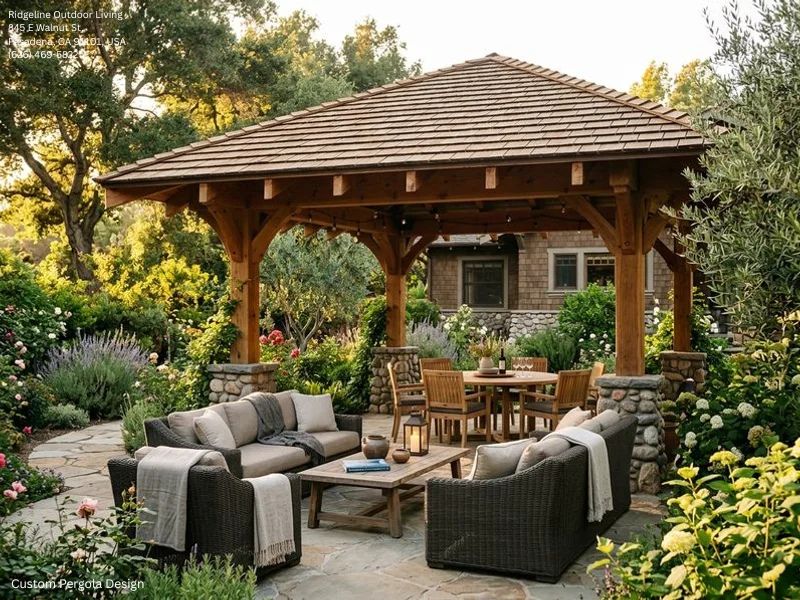
A few backyards resist flame. Very small lots with tight setbacks, cantilevered decks with limited load capacity, and heavily wooded canyons during high fire risk can tip the decision against a pit. In those cases, radiant electric heaters under a pergola or a covered patio still create a warm zone. Why Los Angeles Homeowners Are Investing in Custom Pergolas ties into this approach. You keep the conversations outside and skip the open flame for now, then revisit a pit when conditions or codes allow.
Bringing it together
Great backyards are not a jumble of features. They are a few strong moves that work together. If you are weighing 10 Backyard Upgrades Worth the Investment, a well-designed fire pit usually ranks near the top because it adds nightly value, not just occasional sparkle. Ridgeline Outdoor Living’s Guide to Outdoor Kitchen Design, 12 Outdoor Living Features That Add the Most Value, and The Best Hardscape Materials for Southern California Landscapes all touch decisions that ripple into fire design. Get the placement right, choose a fuel that fits your habits and your neighborhood, and match materials to sun, wind, and water. Do that, and the first cool evening after the build will answer whether you got it right. The chairs will fill, the stories will lengthen, and your backyard will finally feel complete.