The most resilient California landscapes do two things well. They celebrate place, and they waste nothing. Water sits at the heart of that equation. From Los Angeles foothills to breezy coastal tracts, we see clients eager to cut irrigation without giving up comfort, beauty, or home value. The good news is that a water-wise yard can feel richer and more alive than a thirsty lawn ever did. It takes design discipline, craft in the details, and materials that suit Southern California’s sun and soil.
Ridgeline Outdoor Living approaches water efficiency as both an aesthetic and a technical pursuit. Plants, grading, paving, lighting, and drainage form one system. Parts of that system save water outright, others protect your property when rare storms arrive. The following 15 ideas draw from recent projects across Los Angeles neighborhoods, from Silver Lake courtyards to hillside properties in Studio City and Pacific Palisades. They pair practical water strategies with the polish of curated outdoor living.
Why water-wise design works in Southern California
Climate patterns in coastal and basin areas bring long dry seasons, followed by brief, intense rains. A conventional lawn tries to fight that rhythm and loses, often using 30 to 50 inches of supplemental water a year. California natives and Mediterranean species evolved for these intervals. Pair that plant palette with smart irrigation, deep mulch, and permeable hardscape, and most homes can cut landscape water use by half or more after establishment. On a typical 4,000 square foot lot with 1,200 square feet of planted area, that savings can reach thousands of gallons per month in peak summer.
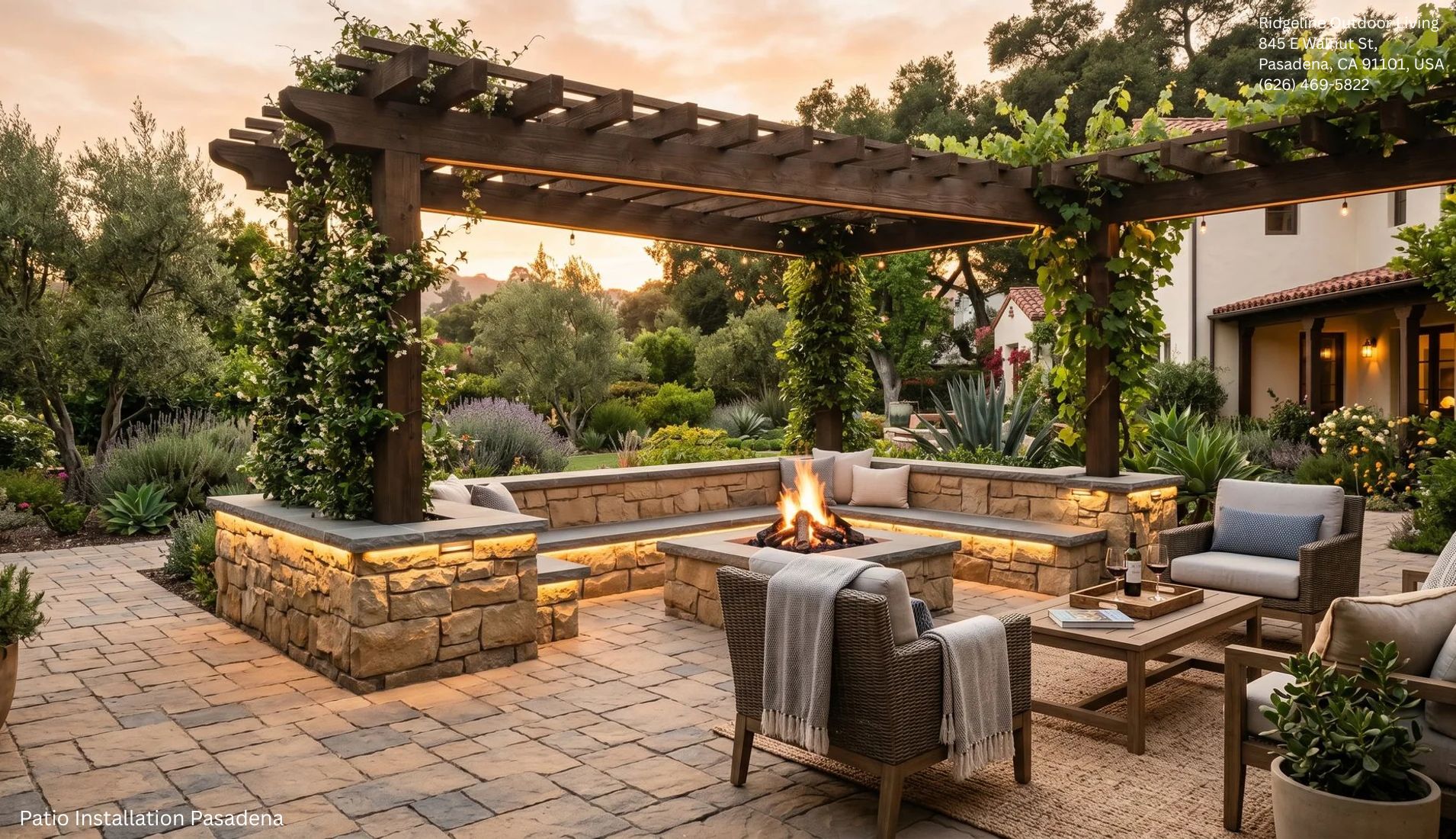
Durability follows. Plants that like the site grow thicker roots, resist pests, and rebound after heat waves. Hardscape that lets water pass reduces puddling and heave. Proper drainage avoids slope movement and protects foundations. The landscape stops being a project you chase, and becomes a system that runs quietly in the background.
The design foundation we use before any planting begins
We map sun, wind, and water in the first site walk. Roof downspouts, soil texture, and grade breaks tell us where to slow water, where to move it, and what to plant. On hillside properties, we look for evidence of shallow slides, saturated soils near retaining walls, and any blocked weep holes. In flat yards, we focus on low points and hardscape edges that trap runoff. Where cooking, dining, and fire features will live matters just as much as the hydrozone layout. An outdoor kitchen sited under a pergola with western shade uses less water in nearby beds, since plants are not fighting late afternoon heat.
Every project is a set of trade-offs. A lawn alternative can be a dense meadow or a crisp artificial turf field. A bioswale can be a simple native grass swale or a stone lined feature with accent lighting. Below are 15 ideas we return to often, adapted to site and style.
1. Build a native and Mediterranean backbone
A backbone palette sets the tone of the entire garden. For Los Angeles yards, we favor California natives paired with Mediterranean and South African allies that share water habits. Consider manzanita, ceanothus, island bush poppy, toyon, and salvia for structure and bloom. Mix with westringia, rosemary, lavender, lomandra, and leucadendron for evergreen mass and seasonal color.
A Los landscaping guides Feliz project swapped 1,000 square feet of bluegrass for layered beds of Arctostaphylos ‘Howard McMinn’, Salvia clevelandii, and Lomandra ‘Breeze’. The yard now drinks about 60 percent less water. In spring, the fragrance lifts off the salvia in the evening. In August, the manzanita carries the composition.
2. Hydrozoning, done with a designer’s eye
Hydrozoning groups plants by water need, but the art lies in the transitions. High need areas near entries or play spaces can share a line, while the majority of the yard runs lean. We design these zones to align with vignettes, not just irrigation circuits. A sunny curb strip becomes a silver-green scene of olive, santolina, and blue fescue on a very low schedule. A shaded side yard with ferns and heuchera earns its own line, set to a longer but less frequent drip cycle.
Once established, a well built low water zone may need 0.3 to 0.6 inches of water per week in peak heat, often delivered through deep, slow irrigation. Timing, not volume, does most of the work.
3. Skip spray heads, use drip and subsurface lines
Overhead spray in coastal winds loses water to evaporation and drift. We favor point source drip, inline drip with pressure compensating emitters, and subsurface lines beneath groundcovers. These systems apply water exactly at the root zone and encourage deep rooting. Smart controllers with weather data and a simple flow sensor catch breaks early. The initial cost is modest compared to monthly savings, and maintenance is straightforward when the layout is clearly mapped.
4. Upgrade the soil before you pick a plant
Soil is your water bank. Sandy soils drain too fast, heavy clays hold too long, and both waste irrigation. We test texture with a jar test, then amend where appropriate. For most ornamental beds, two to three inches of screened compost incorporated in the top eight inches of soil improves water holding without smothering native soil structure. For strict native plantings on clay, we often skip amendment and focus on contouring and surface mulch, because many natives dislike rich, moist soils around the crown.
Mulch is nonnegotiable. Three inches of chunky, arborist chip mulch suppresses weeds, insulates the soil, and reduces evaporation. Keep it a few inches off stems and trunks.
5. Replace thirsty lawn with a meadow or low mow blend
A traditional lawn reads as empty from twenty feet away. A meadow pulls the eye and houses pollinators. We like Carex pansa or Carex praegracilis for a soft, low mow sward that can stay green on much less water than fescue. For a looser look, pair Sesleria autumnalis with native yarrow and blue grama. In front yards, this approach carries curb appeal without the sprinkler fog of a bluegrass strip.
Maintenance shifts from weekly mowing to seasonal grooming. In late winter, a hard cut or comb keeps the look tidy. Irrigation cycles shift to deeper, less frequent runs. Clients who travel appreciate how forgiving these plantings are.
6. Choose artificial turf strategically, not everywhere
Artificial turf vs sod is a real choice in high traffic zones. We specify high quality, heat resistant turf over a permeable crushed rock base with proper edging and a cooled infill. This setup drains well and stays flatter over time. It shines in narrow side yards, small play courts, and rooftop terraces where irrigation would be awkward.
There are trade-offs. Artificial turf holds heat in direct sun, so we plan shade trees or a pergola nearby. It also requires periodic disinfection and grooming. Used as a surgical tool rather than a blanket solution, it solves functional problems while keeping most of the site planted.
Business Name: Ridgeline Outdoor Living
Address: 845 E Walnut St, Pasadena, CA 91101, United States
Phone: (626) 469-5822
Ridgeline Outdoor Living
Ridgeline Outdoor Living is a Pasadena-based landscape design-build company serving Greater Los Angeles with custom outdoor living, hardscape, and drought-tolerant landscape solutions. The company specializes in patios, retaining walls, outdoor kitchens, drainage, hillside projects, and turnkey landscape construction, handling projects from design and permitting through final build and warranty.
845 E Walnut St, Pasadena, CA 91101, USA
Business Hours:
- Monday – Saturday: 8:00 AM – 6:00 PM
- Sunday: Closed
Follow Us:
7. Go permeable underfoot
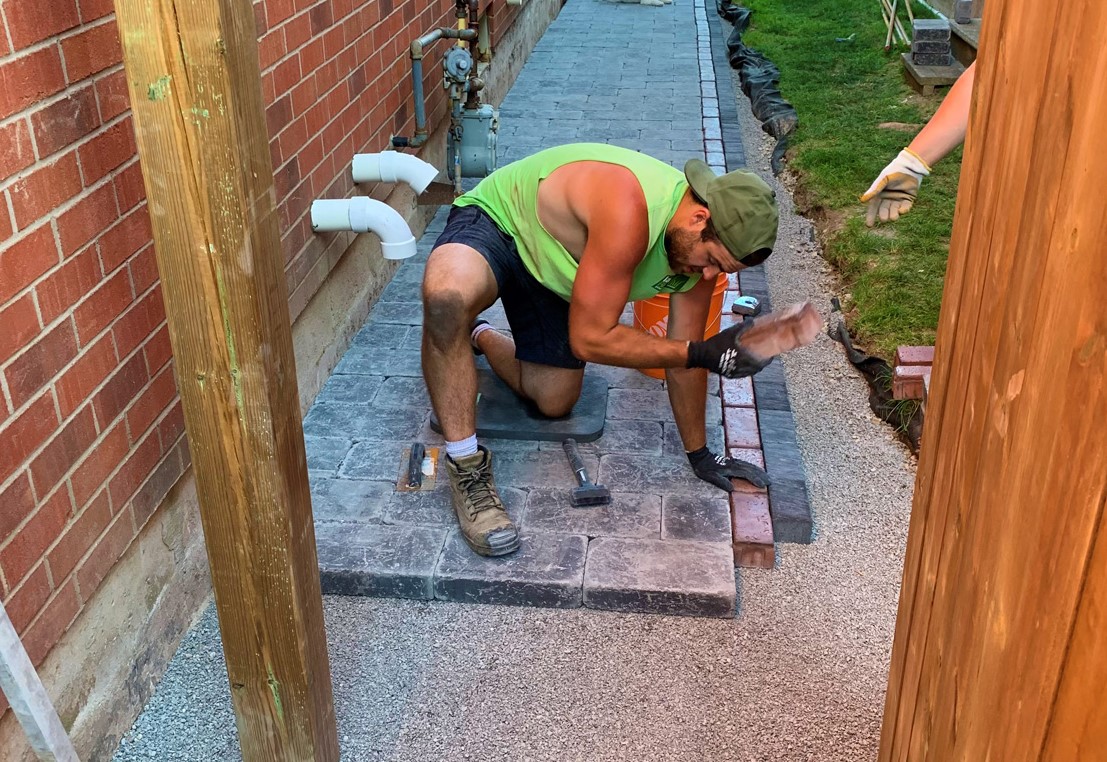
Permeable hardscape collects and returns water to the soil, and it looks sharp when detailed well. On patios and walkways, permeable pavers or spaced stone with planted joints soften glare and keep surfaces cooler. For driveways, open joint pavers over an engineered base can handle vehicle loads while allowing infiltration.
Clients often ask about cost. Paver patios vs stamped concrete run differently. In Los Angeles, a well installed paver patio commonly costs more than basic stamped concrete, but offers repairability, curb appeal, and permeability that concrete struggles to match. When we discuss 15 Paver Patio Designs Los Angeles Homeowners Love, many favorites use blended colors, porcelain plank pavers for a modern look, or tumbled edges that echo older neighborhoods, all laid permeably.
8. Shape the land to slow water
Contouring does not need to be dramatic. Slight grade changes and shallow basins collect roof runoff and let it percolate instead of racing to the street. On flat sites, a broad, barely perceptible swale through the planting is enough to hold a one inch rain. In hillside yards, subtle terraces ease irrigation and control erosion.
Where slopes exceed safe angles or soils expand and contract seasonally, retaining walls earn their keep. Retaining walls for hillside properties are not just visual edges. They are structural elements designed to retain soils, relieve hydrostatic pressure with drains, and create usable zones. We integrate weep holes and behind wall drainage to prevent water buildup. The result is safer, greener, and more functional.
9. Capture and guide stormwater with bioswales and rain gardens
A bioswale is a planted channel that slows and filters runoff. A rain garden is a sink, sized to hold a design storm and drain within a day or two. Both remove demand from city systems and feed your soil bank. We line swales with river rock and drought tolerant plants like juncus, carex, and deergrass at the bottom, then step to artemisia, salvia, or baccharis on the rims. The look can swing from wild meadow to crisp modern, depending on stone size and plant spacing.
In a Mar Vista yard, two downspouts now empty into a 30 foot swale that arcs through a front garden. The street sees little of that water, and the adjacent Arbutus and Carpenteria have never looked better.
10. Install French drains where they belong, not everywhere
French drains explained simply, they are perforated pipes wrapped in fabric and gravel, set to intercept subsurface water and move it safely. They are not a cure for every wet spot. We use them at the toe of slopes, behind retaining walls, or along foundations where soil remains saturated after storms. The outlet matters. Drains must daylight or tie into a legal discharge point.
Poorly executed drains clog with fines and become expensive dead weight. We specify washed angular gravel, non woven fabric that passes water but blocks soil, and cleanouts at logical intervals. When the problem is surface grading, we fix the grades first. That single decision saves a great deal of unnecessary pipe.
11. Use shade to cut water demand sharply
Shade means less radiant heat, less transpiration, and less irrigation. We layer shade in three ways. Deciduous trees on the west temper summer heat but allow winter sun. Pergolas or covered patios lower the skin temperature of adjacent planting and create an outdoor room. Vines on trellises cool vertical surfaces and hide fences.
Homeowners often ask about pergolas vs covered patios for comfort. Covered patios offer all weather protection and deeper shade, while pergolas with adjustable louvers or vines give dappled light and lower structural mass. In both cases, the beds beneath use less water and plants suffer less leaf scorch. For clients exploring Outdoor Kitchen Trends Los Angeles Homeowners Are Choosing, we frequently pair a louvered pergola with task lighting and a ceiling fan to manage heat without mist systems.
12. Plant for the grill and the table, with drought in mind
Edible landscaping can be water wise if you choose the right plants. Olives, figs, pomegranates, and loquats thrive in dry summers once established. Herbs like rosemary, thyme, sage, and oregano prefer lean soils and low irrigation. We cluster higher need edibles, such as citrus or raised bed veggies, near the hose bib and keep them on their own irrigation zone.
Clients planning an outdoor kitchen usually want herbs within reach. A 12 inch deep, 20 foot long planter can hold a surprising amount of rosemary, chives, basil, and thyme with a single drip line and a moisture sensor. As for How Much Does an Outdoor Kitchen Cost in Los Angeles, budgets vary widely. Simple grill stations often start in the low five figures, while full suites with refrigeration, storage, gas lines, counters, and shade structures reach into the mid to high five figures. Planning water and power together with the layout avoids later trenching through planted areas.
13. Light the landscape without wasting energy or water
Lighting does not drink water, but it shapes how you use the outdoor room, which affects plant selection and irrigation near paths and seating. We design 10 Outdoor Lighting Ideas for Los Angeles Landscapes with low voltage LED fixtures, warm color temperatures, and tight beam spreads to avoid glare. Shielded path lights keep night insects undisturbed. Uplights on specimen trees use narrow beams to minimize wattage.
Do not wash beds with unnecessary light. Plants under hot fixtures can dry faster. A few well placed accents and a soft wash on walls creates depth and extends evenings outside. The bonus is security and safer circulation without the energy cost of floodlights.
14. Create a fire feature that respects drought conditions
Open flames and dry landscapes must coexist carefully. Gas fire pits with electronic ignition and a hard, non combustible surround are the safest choice. We prefer bowl or linear burners nested within stone or precast concrete, sited over permeable base so rain drains freely. Wood fires look romantic, but they shed embers and require storage that attracts pests.
We tend to fold fire features into seating terraces. Clients browsing 12 Backyard Fire Pit Ideas for Entertaining Year-Round often land on low, modern profiles with integrated bench walls. The nearby plantings rely on low, fleshy species like aeonium and senecio that shrug off heat and ask for little water. Keep flammables and tall grasses back at least several feet.
15. Right size the pool landscape and manage splash wisely
Pools are not automatically water hogs. Evaporation drives most losses. Smaller surface areas, automatic covers, and wind breaks conserve water. For the planting around pools, we pick species that tolerate reflected heat and occasional splash without frequent irrigation. Agave, aloe, phormium, westringia, and bougainvillea handle poolside microclimates well. Turf near pools tends to get hammered, so we recommend porcelain pavers or a compacted DG band, separated from beds with a discreet steel edge.
For clients after Pool Landscaping Ideas for Los Angeles Homes, we often push hardscape in by a foot or two and give that space to a narrow planting spine fed by a dedicated drip line. The green relief makes the pool feel integrated, not dropped onto the lot, and water use remains modest.
A practical path to transformation
Ridgeline Outdoor Living designs and builds as one team, which lets us tune water strategies to the final look without compromise. After dozens of drought tolerant conversions, we have found that the best results happen when the homeowner has a simple set of priorities and a willingness to phase work in a smart order.
- Decide what you must keep or add, such as a dining terrace, kids play area, or an outdoor kitchen. Establish drainage and grading first, including any French drains or swales. Install hardscape and irrigation together, then plant with a clear hydrozone plan. Mulch heavily, monitor with a smart controller, and adjust monthly the first season. Add lighting and small features last, once plant growth patterns are visible.
Phasing keeps the site clean and prevents backtracking. It also gives you time to learn how the yard behaves after wind, heat, and the first big rain. Small adjustments to irrigation usually pay larger dividends than big, late stage changes.
Curb appeal that lasts
Water wise landscapes hold property value because they look well kept during heat, drought, and winter rain. Buyers notice patios that drain, plants that belong, and driveways that do not crack or puddle. When we talk about 10 Hardscaping Features That Increase Property Value, the repeat performers are permeable paver driveways, generous entry walks, seat walls that define rooms, well scaled steps on slopes, and quality outdoor lighting. None of those features require daily water. They frame the garden and turn maintenance into periodic care.
Driveway materials matter. The Most Popular Driveway Materials in Los Angeles include concrete, pavers, gravel blends in the right neighborhoods, and occasionally resin bound aggregates. For homes prioritizing water, permeable systems paired with a subsurface reservoir can recharge licensed landscapers Pasadena the soil profile and help irrigate adjacent beds by capillarity after storms.
A note on hillside properties and resilience
Hillsides magnify water errors. Over irrigated slopes slough, under drained walls build pressure, and unchecked downspouts carve rills. Our hillside work starts with The Complete Guide to Hillside Landscaping in Los Angeles principles, applied to site conditions. Retaining walls prevent erosion when they include back drains, proper footings, and compacted backfill. Planting leans on deep rooted natives like Aristida, Muhlenbergia, and Arctostaphylos for soil stitch. Irrigation runs subsurface where feasible to avoid runoff. We stage work to stabilize first, then polish.
If you spot 10 Signs Your Yard Needs Better Drainage, such as spongy soil days after rain, algae on hardscape, or staining on walls, involve a pro early. How to Solve Common Yard Drainage Problems often comes down to grading and simple conveyance, not gadgets. When we do need hardware, we install clean, accessible systems that a homeowner or maintenance team can service without guesswork.
Budgeting and long term maintenance
What Does Hardscape Construction Cost in Los Angeles is a frequent question. Ranges are wide, but good work costs less than doing it twice. Water wise features rarely add cost compared to conventional builds. Permeable pavers and smart irrigation may increase line items slightly, while the reduced plant count, more resilient species, and absence of turf maintenance offset long term expenses. Artificial Turf Installation, when appropriate, carries a defined up front cost and reduces ongoing water and mowing, but it should be justified by use.
Maintenance calendars change. The first year, expect monthly walk throughs to tune the controller, check emitters, and cut back overly eager growers. By the second year, most beds shift to seasonal pruning and a few irrigation adjustments. Avoid 10 Outdoor Lighting Mistakes That Reduce Curb Appeal by cleaning lenses, re-aiming after plant growth, and keeping fixtures off during peak moonlight when the garden already glows.
A final perspective from the field
One Brentwood courtyard began as a patchy lawn flanked by two queen palms and a row of boxed hedges. The homeowner wanted a place to host ten people, a grill station, and less water use. We removed 800 square feet of turf, set a porcelain plank patio on a permeable base, and built a low stucco bench with a linear fire feature. The plant list was short and confident, mostly arbutus, westringia, lomandra, and salvia, with a ribbon of juncus in a shallow swale to hold roof water. A louvered pergola shaded the grill and dining table. The yard now uses roughly 65 percent less irrigation in July, and the owner spends evenings outside that used to belong to the living room.
Water wise design is not a sacrifice. It is restraint and craft aimed at comfort, longevity, and a sense of place. When the rain finally arrives, the garden catches every drop it can. When the heat sets in, it rides it out. In between, you live outdoors with less fuss and more pleasure.
If you are ready to rethink a lawn, add a paver terrace, or sort out a tricky slope, start with the water. The rest of the design will fall into place. Ridgeline Outdoor Living’s work across Los Angeles shows that the most sustainable choices often look and feel like luxury, and they keep working long after the first season’s flowers fade.