Los Angeles is a city of views. The best ones tend to come with a slope. A hillside lot can deliver golden light, breeze, and privacy, yet it also tests every decision you make outdoors. Soil wants to move. Water looks for shortcuts. Planting holes become mini engineering projects. Done right, a hillside landscape stabilizes the terrain, frames your home, and turns vertical elevation into usable square footage. Done poorly, it cracks, leaks, and eats budgets.
What follows is the blueprint our team at Ridgeline Outdoor Living applies to Los Angeles hillsides. It is shaped by years of design-build work from Mount Washington to Malibu, on clays and decomposed granite, in wet winters and long drought spells. The intent is simple: help you turn a slope into a safe, enduring, and beautiful place to live.
What makes Los Angeles hillsides different
Two forces define hillsides here: geology and climate. Across the basin and foothills, you will see three recurring conditions. First, many slopes are underlain by colluvium, that loose mix of rock fragments, silt, and decomposed granite. It compacts inconsistently, which means any structure that relies on uniform bearing can settle unevenly unless the foundation strategy adjusts. Second, we have expansive clays in pockets, especially in canyons and older terrace deposits. These clays swell when wet and shrink when dry, a cycle that shifts hardscape and stresses walls. Third, faulted bedrock often sits shallow, which is helpful for anchoring deep foundations, but it makes trenching and utilities more involved.
Business Name: Ridgeline Outdoor Living
Address: 845 E Walnut St, Pasadena, CA 91101, United States
Phone: (626) 469-5822
Ridgeline Outdoor Living
Ridgeline Outdoor Living is a Pasadena-based landscape design-build company serving Greater Los Angeles with custom outdoor living, hardscape, and drought-tolerant landscape solutions. The company specializes in patios, retaining walls, outdoor kitchens, drainage, hillside projects, and turnkey landscape construction, handling projects from design and permitting through final build and warranty.
845 E Walnut St, Pasadena, CA 91101, USA
Business Hours:
- Monday – Saturday: 8:00 AM – 6:00 PM
- Sunday: Closed
Follow Us:
Layer on climate. Los Angeles winters have become swingy: dry stretches interrupted by intense atmospheric river events. Summer and fall, we manage drought and heat. Slope design must handle both ends of that spectrum. That means rapid surface drainage during storms, smart subdrains that survive debris loads, and plant palettes that thrive on minimal irrigation yet can take the occasional gully-washer without uprooting.
Local codes then shape what you can build. The City of Los Angeles hillside ordinance and the California Building Code govern grading, walls, and erosion control. In practical terms, anything more than minor recontouring often requires a grading plan. Retaining walls above a modest height, or any wall supporting a surcharge like a driveway or patio, need structural design. Expect inspections, and plan time for soils reports when walls or caissons enter the picture.
The design mindset that prevents failure
Great hillside landscapes begin with restraint. You do not ask the slope to become something it is not. Instead, you terrace just enough to create flat pads where you need to live, then allow the rest of the terrain to read as a planted hillside. The pattern that works most often is a sequence of narrow platforms linked by steps, each platform serving one clear purpose: a small dining area off the kitchen, a bench and fire feature tucked under a tree, a slim lawn or turf panel for kids or dogs, a viewing deck that turns the skyline into art.
Hydrology dictates the geometry. Every surface needs a controlled path to daylight. We give water redundant routes: surface swales that you can see and maintain, and subdrains that stay protected. We separate clean roof runoff from muddy slope water so one system does not overwhelm the other. We manage the end of the line too. A drain that dumps onto a neighbor’s slope or a public sidewalk is not a solution.
Finally, materials must fit the soil and the use. Paver systems work well on many slopes because they flex slightly and are easy to service. Cast-in-place concrete looks sleek but requires careful subgrade prep and joints to manage movement. Segmental retaining walls can be excellent for lower terraces and curving lines. Taller walls often push you toward reinforced masonry, shotcrete, or concrete with tied-back or caisson-supported foundations. Beauty comes from proportion, detailing, and planting, not just from the most expensive material.
Reading the slope: a site assessment walk
On a first visit, we walk the property from the top down and back again. We take photos after rain when possible. Cracked garden walls, tilted fences, and bowing steps tell a story. So do rills on bare soil and stained lines on stucco near the base of the house. We look for yard drains buried under mulch or blocked by roots. We probe planting beds for depth to firm soil. We note utilities, clearances for fire access, and space for staging construction materials.
A neighbor in Silver Lake once called after a modest winter storm sent water under their garage door. The issue was not the garage at all. The path surface above, sloped just two degrees the wrong way, fed water toward a planter without an exit. One clogged curb drain later, the water found the garage. A small regrade, two new catch basins, and a cleanout port fixed it. Problems on hillsides often cascade from tiny grading mistakes. That is why the walk matters.
The art and structure of retaining walls
Walls do more than hold soil. They define space, act as seating, hide utilities, and set the tone for the garden. But on a hillside, they carry liability if misdesigned. A safe rule: when a retaining wall in Los Angeles will exceed roughly three to four feet in height, support a driveway or deck, or sit near a property line, bring in a soils engineer and a structural designer. The peace of mind, and the permit path, are worth it.
For walls under about five feet without surcharge, segmental block systems with geogrid can be efficient, good looking, and quick to install. For tighter sites, reinforced CMU or poured concrete with a footing can keep thickness down. Where slopes are steep or the soil is weak, engineers often choose soldier piles with lagging, or shotcrete walls pinned to caissons, especially along driveways. Do not forget drainage behind the wall: perforated pipe at the base, wrapped and bedded in free-draining gravel, with filter fabric to keep fines out. Weep holes or scuppers relieve hydrostatic pressure and give you a visible cue if the system needs service.
Homeowners sometimes ask whether stacked stone without mortar is enough. For low garden edges, yes. For a load-bearing terrace on a Los Feliz slope, no. If you need a refresher on options and costs, The Complete Guide to Retaining Walls in Los Angeles and Retaining Walls for Hillside Properties: What Homeowners Need to Know map the decision tree in detail.
As for cost ranges, the spread is wide because engineering and access drive price more than the face material. In our recent projects, simple shorter segmental walls might land in the range of 90 to 160 dollars per square foot of face. Reinforced masonry or concrete with standard footings often runs higher. Caisson and grade beam systems are another tier entirely, reflecting drilling, steel, concrete, and inspections. Tight access can add meaningful labor time.
Terracing with purpose, not excess
Every terrace you cut or build has ripple effects. It needs drainage, lighting, irrigation, and access. It changes how you experience the yard. We start by drawing the minimum number of platforms that deliver the lifestyle you want. If you cook outside three nights a week, your outdoor kitchen belongs on the closest tier to the indoor kitchen, not down a flight of twenty steps. If you host larger groups a few times a year, a broader terrace mid-slope can take the crowd, with a softer planted hillside interrupting the view of hardscape.
Materials should fit both the foot traffic and the maintenance plan. If you prefer permeable systems and easier serviceability, pavers often beat monolithic concrete. Our designers keep a folder of 15 Paver Patio Designs Los Angeles Homeowners Love, and most are modest in footprint yet intentional in layout: herringbone paths that guide the eye, large-format units to visually widen a narrow terrace, borders that hold planters in place. If you prefer the look of a continuous surface, Paver Patios vs Stamped Concrete: Pros and Cons can help you compare flexibility, cost, and appearance in our climate.
We like integrating seat walls at terrace edges. They do double duty by trimming the perceived drop while adding casual seating around a fire pit or a coffee table. For grade changes under two feet, a seat wall with a back planting strip can replace a taller wall entirely, which reduces visual bulk.
Drainage that works in winter and summer
Los Angeles storms test systems with debris and volume. A good drainage design accepts that reality. Open swales with rock lining carry surface water quickly and stay easy to inspect. Catch basins get oversized grates and a clear maintenance path. French drains explained simply: they collect groundwater or infiltrating water along the toe of a slope or behind walls and pipe it out. The gravel envelope and the fabric are the heart of the system. We specify fabric with the right pore size to prevent fines migration but still pass water, and we add cleanouts at logical intervals so a plumber can jet the line without excavation.
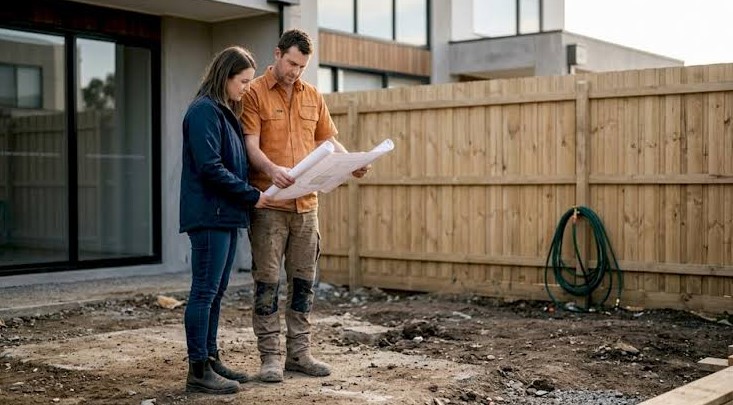
Costs vary by site, but as a planning figure, properly built French drains and surface drains often fall into a range per linear foot that reflects excavation, rock, pipe, fabric, and finish work. Longer trench runs through roots or under hardscape will rise from there. If you are trying to understand whether you even need a new system, 10 Signs Your Yard Needs Better Drainage and How to Solve Common Yard Drainage Problems are good primers.
One caution we repeat on hillsides: separate different waters. Roof downspouts should tie to a dedicated conductor line sized for roof area. Courtyard drains should not share a line with a wall subdrain. Yard basins collecting slope flow should not backfeed into patio drains. Segregation keeps each system working in the one hour you need it most.
Planting for roots, erosion control, and fire
Plants on a slope are not decoration first. They are geology’s allies. Root architecture matters more than flower color at the start. Deep fibrous root systems knit the upper soil and slow raindrop impact. Lateral roots stabilize the surface against small slides. In practice, that has led us to a recurrent palette of drought-tolerant shrubs and grasses tailored to aspect and exposure.
On a west-facing slope in Brentwood, we used a frame of coast rosemary, grevillea, and cistus for structure, with drifts of deer grass, blue grama, and lomandra to bind soils and move in the wind. In filtered shade, we favor manzanita varieties with open form and red bark, layered with carex and Pacific wax myrtle where more mass is needed. The Best Drought-Tolerant Plants for Los Angeles Yards and The Ultimate Guide to Drought-Tolerant Landscaping in Los Angeles dive deeper into species and combinations that handle heat while building soil stability.
Irrigation stays precise. Drip lines on slope demand pressure-compensating emitters, check valves at low points, and zoning by exposure. Smart controllers help, but the hydraulic design under them must be sound. Mulch is not optional. Three inches of shredded bark or wood fiber reduces surface sealing under rain and feeds soil microbes, yet it must be kept away from structures and monitored in high fire zones.
Speaking of fire, maintain defensible space. Break plant masses into islands with non-combustible hardscape or gravel bands near the home. Select plants with high moisture content and low resin where it matters most. We often combine boulders with low mats of dymondia or silver carpet in key transition zones to slow flame and heat.
Access, stairs, and comfort on the slope
The best hillside yards feel natural to move through. Stairs do the heavy lifting. In the city, code often points to maximum riser heights and minimum tread depths, but comfort guides the design. On long runs, we aim for shorter risers and deeper treads, with landings that match the walking rhythm. Materials should offer traction without roughness. Paver treads with bullnose edges sit well next to CMU seat walls. For step lighting, we prefer fixtures tucked under nosings to reduce glare and improve safety.
Railings are not a defeat. A slender steel or hardwood rail can add a strong line and keep guests comfortable. Plant it into the design early so it does not feel bolted on.
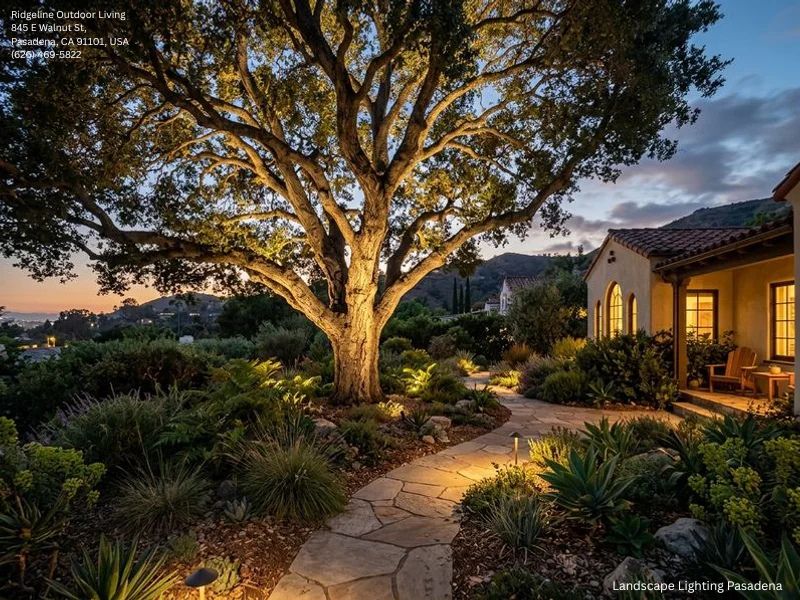
Lighting pulls the garden together at night. A hillside benefits from layers: gentle step lights for safety, soft wall washes to reveal texture, and a few downlights from trees that simulate moonlight on paths. The 10 Outdoor Lighting Ideas for Los Angeles Landscapes article lays out patterns that work Los Angeles landscape companies without turning your hillside into a runway. Avoid the common mistakes that kill curb appeal, like bright blue light or overly tall path fixtures, as outlined in 10 Outdoor Lighting Mistakes That Reduce Curb Appeal.
Small lawns and turf on slopes
Not every family wants or needs grass on a hillside, but a small flat turf panel can anchor a composition. On pragmatic grounds, artificial turf vs sod becomes a maintenance and durability question in Los Angeles. Sod or seeded cool-season grass looks and feels natural but needs water, careful mowing on slopes, and reinforcement at edges. Artificial turf reduces water and stays green, yet it requires a well-draining base, heat can build in full sun, and quality of installation determines longevity.
For moderate slopes, neither sod nor turf should be placed without terracing or steps to create maintenance access. Where turf is part of the plan, we tend to keep panels on primary terraces. Artificial Turf Installation: Everything Los Angeles Homeowners Should Know walks through base prep, drainage, and selection. If you are leaning natural, plan for a subsurface irrigation zone that can handle summer heat without runoff.
Fire features, water, and comfort microclimates
Hillsides invite gathering around a flame or water’s sound. Gas fire bowls and linear fire features do well where wind would buffet a wood fire. 12 Backyard Fire Pit Ideas for Entertaining Year-Round showcases configurations that make sense on narrow terraces, from corner benches with a circular bowl to a low linear trough along a view edge. Where you add fire, confirm clearances from structures, install a proper gas line sized for BTU demand, and include a shutoff valve in a sensible spot.
Water features on slopes need honest hydraulics. A scupper that spills into a rill can traverse a hillside in short cascades, with basins that you can clean. Keep mechanicals accessible on a reachable terrace, not under a deck down a flight of stairs. 12 Water Feature Ideas for Luxury Los Angeles Backyards includes examples that use grade changes to amplify sound without enormous pumps.
Shade is another comfort layer. On the top terrace, a custom pergola or a well-positioned covered patio keeps the kitchen usable on hot days and adds a lighting and heat source point for evenings. If you are weighing Pergolas vs Covered Patios: Which Is Right for Your Home?, consider your slope’s wind exposure and the look from below. In wildfire zones, choose non-combustible roofing for covers near the home and keep vegetation clear.
Outdoor kitchens and entertaining zones that actually get used
If the kitchen is not convenient, it will gather dust. The best ones sit within a few steps of the indoor kitchen and share utilities without trenching across the slope. The question How Much Does an Outdoor Kitchen Cost in Los Angeles? Has a broad answer, driven by appliances, finishes, and access. As a planning range, a compact, well-built kitchen with grill, storage, and counter can sit in a band that reflects quality stainless components and durable finishes, while larger L or U shapes with refrigeration, pizza ovens, and island seating rise accordingly. Outdoor Kitchen Trends Los Angeles Homeowners Are Choosing skew toward modularity, heat management, and sleek facades that match the home’s architecture rather than default rock veneer.
On lower terraces, we like simple entertainment moves: a small projection wall with weatherproof speakers, a narrow bar that doubles as a guard at a view edge, a movable cart rather than a second built-in. 12 Backyard Entertainment Features Every Homeowner Should Consider is a good reference for items that earn their footprint.
Driveways and the approach on a slope
The way you arrive sets expectations for the rest of the property. On hillside lots, driveways often occupy retaining conditions or snake along a cut. Permeable pavers manage stormwater well and look sharp, while resin-bound gravel adds texture if engineered correctly for slope and drainage. The Most Popular Driveway Materials in Los Angeles and 15 Driveway Paving Ideas to Improve Curb Appeal highlight approaches that stay safe under tires yet complement the architecture. Where a driveway wall retains a slope above or supports the drive itself, treat it like any structural wall, with drainage and permits to match.
A blueprint: how Ridgeline approaches hillside design-build
Our process stays consistent because the slope demands it.
- Site study and soils: Document grades, drainage paths, utilities, and access. If walls or significant loads are planned, commission a soils report early. Concept to permit: Align lifestyle goals with terraces and circulation. Engage structural and civil partners for walls and drainage. Prepare submittals that pass the hillside ordinance and plan check. Build with sequencing: Install erosion control and temp drains first. Rough in utilities and subdrains before walls. Backfill with proper gravel and fabric. Surface grade and hardscape next. Plant and mulch last, then commission irrigation and lighting. Maintain like an asset: Schedule drain and basin cleaning before storm season. Adjust irrigation quarterly. Inspect wall weeps and slope plant health annually.
Each step guards against the domino effects that topple poorly planned hillside work.
Cost architecture and value decisions
Hillside projects carry line items flat lots do not. Exporting soil takes trucks and permits. Staging might require a crane or a narrow conveyor. Labor hours rise when every move travels up and down stairs. That said, dollars spent upstream on engineering and drainage often save multiples later. We counsel clients to apportion budgets so the structure and water management get what they need, then tailor finishes and features to the remaining envelope.
If you are mapping priorities, 10 Backyard Upgrades Worth the Investment and 10 Hardscaping Features That Increase Property Value both reach the same conclusion we see in resale: well-executed terraces, lighting, and a confident approach sequence rank high. Pool additions require their own analysis. If a pool is in the cards, involve the landscape and pool designers early so the shell, access, and utilities integrate with the rest of the slope. Pool Landscaping Ideas for Los Angeles Homes collects precedents that respect grade.
For a broad sense of price drivers, What Does Hardscape Construction Cost in Los Angeles? Explains how access, thickness, and engineering move numbers. If your slope pushes you toward pavers on one terrace, stamped or cast concrete on another, and gravel on a third, that is a rational hybrid, not indecision.
Common mistakes we redesign around
The failure patterns repeat. A patio sits above finish floor with no curb or trench drain at the door. A wall lacks a drain and leans two years in. Turf gets installed on a slope with spray heads that create runoff. Planting chooses thirst instead of structure. Lighting glares into neighbors’ windows. These are not mysteries, just oversights. 10 Backyard Renovation Mistakes to Avoid and Why Professional Landscape Design Saves Time and Money read like cautionary tales because they are drawn from real jobs we have corrected.
On one Hollywood Hills property, a prior contractor built a sunken fire pit on a terrace without a drain. A single storm turned it into a cold spa. We added a hidden basin with a sump pump tied to a dedicated line that daylights at the street, then raised the pit’s floor an inch to clear minor leaf buildup. Sometimes the fix is surgical, but it always begins with water.
Maintenance as strategy, not afterthought
A hillside landscape matures beautifully if you tend the invisible systems. We teach clients to schedule specific tasks, not generic yard care. Clean grates and basins before the first forecasted heavy rain. Jet subdrains every few years where trees share the alignment. Check the controller’s seasonal adjust settings each quarter, then look at the plants and the soil, not just the app. Touch up decomposed granite paths before rills deepen. Replace corroded step light lamps with sealed LEDs rated for exterior use.
For anyone new to slope ownership, a compact checklist helps.
- After big storms, walk the slope. Look for fresh erosion, clogged grates, or water emerging from wall weeps longer than a day. Each fall, clear leaves from terraces and drains, refresh mulch, and test lighting. Quarterly, run each irrigation zone manually and watch for breaks, pooling, or runoff. Annually, inspect walls for bulges or cracks, then photograph the same spots for comparison over time. Every two to three years, prune for structure and ladder fuel reduction, not just shape.
A hillside is never finished. It evolves. Good maintenance honors that.
Bringing it all together
A successful Los Angeles hillside landscape reads as confident and calm. The lines feel inevitable. Water knows where to go. Stairs guide you without thought. Plantings hold the slope and draw your eye outward. Features sit where you use them, not where the plan wanted them. When we present How Ridgeline Outdoor Living Creates Functional Outdoor Living Spaces, this is what we mean on a slope: form serving function, with engineering and beauty woven tightly together.
If you are just starting to imagine possibilities, look through 10 Hillside Landscaping Ideas for Challenging Properties or 15 Luxury Hardscape Ideas for Southern California Homes to spark your eye. If you are deep in the weeds with drainage issues, French Drains Explained: Protecting Your Property From Water Damage and How to Prevent Yard Flooding With Proper Drainage Solutions can orient your next steps. If your project calls for an outdoor kitchen, Ridgeline Outdoor Living’s Guide to Outdoor Kitchen Design gets you past appliance catalogs to a real cooking space.
Above all, design with humility to the hillside. Use terraces sparingly, manage water decisively, lean on plants with structure, and build as if you will live with the slope for decades. The view will reward you, and the ground beneath your feet will feel solid under every season Los Angeles sends your way.